Top-Rated Presence Sensors for Smarter Home Automation
You get precise, pet-proof detection up to 10 meters with mmWave radar sensors like the Aqara FP2, which covers 40㎡, ignores movements below 0.6m, and runs locally without the cloud. The SwitchBot adds PIR and light sensing, while the Meross and eMotion Pro offer Wi-Fi, AI filtering, and Home Assistant support. For DIY builds, the LD2410C 3-pack gives 5-meter sensing with Arduino compatibility. Choose AKAMATIS or WenzhiIoT for ESPHome or Zigbee integration-each balances range, privacy, and real-world reliability. More details on fitting one to your setup await.
We are supported by our audience. When you purchase through links on our site, we may earn an affiliate commission, at no extra cost for you. Learn more. Last update on 19th July 2026 / Images from Amazon Product Advertising API.
Notable Insights
- Aqara FP2 offers precise 40㎡ coverage with mmWave radar, pet immunity, and local automation for reliable, offline-ready presence detection.
- SwitchBot combines mmWave, PIR, and light sensing with AI learning to reduce false alerts while detecting motion and stationary presence up to 8 m.
- Meross Matter Human Presence Sensor uses AI-powered mmWave and PIR to detect motionless humans and supports broad smart home platforms with hub-dependent Matter.
- THIRDREALITY R3 leverages 60 GHz radar for micro-motion and breathing detection, ideal for high-accuracy presence monitoring in smart spaces.
- AKAMATIS v2.2 comes pre-flashed with ESPHome for seamless, no-code Home Assistant integration, powered via USB-C with strong Wi-Fi reception.
Aqara Presence Sensor FP2 Smart Motion Detector
If you’re looking for a presence sensor that combines precision, privacy, and powerful automation without relying on cameras, the Aqara Presence Sensor FP2 is hands-down the best choice for smart home enthusiasts and DIY automation tinkerers. I use it to detect motion across 40㎡ with zero false triggers-its mmWave radar ignores pets, fans, and curtains by filtering below 0.6m. It tracks up to five people, maps 30 zones, and runs automations locally, so everything stays fast, even offline. I mounted it on the ceiling for fall detection and sleep tracking, and it sends alerts when my parents are inactive too long. It’s IPX5-rated, so I safely installed it in the bathroom, and it works flawlessly with HomeKit, Alexa, and Home Assistant-no hub needed.
Best For: Smart home enthusiasts and caregivers seeking a privacy-focused, highly accurate presence sensor with advanced automation, health monitoring, and multi-person tracking capabilities.
Pros:
- Uses mmWave radar for precise human detection with support for up to 5 people and 30 customizable zones, minimizing false triggers from pets or moving objects
- Enables privacy-centric monitoring with camera-free operation, local automation execution, and health features like fall detection, inactivity alerts, and non-wearable sleep tracking
- Offers broad smart home compatibility with direct integration into HomeKit, Alexa, Google Home, and Home Assistant-no hub required-and includes IPX5 waterproofing for bathroom installation
Cons:
- Requires 2.4 GHz Wi-Fi and must be within close range (6 meters) of the router for stable connectivity, limiting placement flexibility
- Ceiling mounting is necessary for fall detection, which may complicate installation for some users
- Power adapter not included, and continuous power requirement eliminates battery-powered operation options
SwitchBot Smart Radar Motion Sensor
Who wouldn’t want a motion sensor that knows the difference between a swaying curtain and someone quietly reading on the couch? I rely on the SwitchBot Smart Radar Motion Sensor (Model W1101500) to do exactly that. It uses mmWave radar, PIR, and light sensing to detect subtle chest movements, covering up to 8 m for motion, 5 m for stationary presence. Its 120° wide-angle view works great in bathrooms or studies. I love its magnetic base-it mounts flat or on walls, runs 3 years on included AAA batteries, and pairs seamlessly with SwitchBot devices, Hub, Apple Home, Alexa, and Google. With one-click AI learning, it ignores fans or pets, cuts false triggers, and adapts fast.
Best For: Smart home users seeking reliable, long-lasting motion and presence detection with advanced AI filtering for accurate automation in rooms like bathrooms, living areas, and offices.
Pros:
- Uses mmWave radar, PIR, and light sensing to detect both motion and stationary presence with high accuracy
- Magnetic base and battery-powered design allow flexible, tool-free installation with up to 3 years of battery life
- Supports local automation, works with major smart home platforms, and features AI self-learning to reduce false triggers
Cons:
- Limited to 5 automations when used without a SwitchBot Hub
- Stationary detection range capped at 5 meters, shorter than motion detection range
- AI learning and zone adjustment features may require user calibration for optimal performance
Meross Matter Human Presence Sensor
The Meross Matter Human Presence Sensor stands out for smart home builders who want reliable, multi-modal detection without constant tweaking, and I’ve found it’s ideal for anyone integrating automation into rooms where people stay still for long stretches-like home offices or living rooms. It combines PIR, 6-meter mmWave radar, and light sensing to detect presence-even motionless-with AI cutting false alerts. The pet-proof shield ignores vacuums and cats under 55 lbs. I love the 180° pivot, 360° rotation, and clean cable management. It runs on 2.4GHz Wi-Fi, natively supports HomeKit, Alexa, Google, and Home Assistant, and works locally via Matter with a hub. At 2.97 inches deep and 6.4 oz, it’s compact, white, and wall-mounted. I’ve seen 4.2-star feedback from 352 users, and it’s already top 40 in Amazon’s motion detectors-proof it delivers where it counts.
Best For: Smart home builders seeking reliable, multi-sensor human presence detection with local processing and broad ecosystem integration.
Pros:
- Combines PIR, mmWave radar, and light sensing for accurate motionless human detection up to 6 meters
- Supports Matter, HomeKit, Alexa, Google Home, and Home Assistant with local control and no hub required for most platforms
- Adjustable 180° pivot and 360° rotation with integrated cable management for flexible, clean wall mounting
Cons:
- Requires continuous power and wall installation, limiting placement flexibility
- Matter functionality needs a separate hub, adding to setup complexity and cost
- 2.4GHz Wi-Fi only, excluding compatibility with 5GHz networks
AKAMATIS Human Presence Sensor v2.2

You’ll get the most out of the AKAMATIS Human Presence Sensor v2.2 if you’re already running Home Assistant, since it’s built specifically to work within that ecosystem and gives you local control without relying on the cloud. I use it with my setup, and the millimeter-wave radar (HLK-LD2410B) detects me even when I’m still-up to 20 ft away. It’s way more reliable than PIR sensors, covering a full room with one unit. The Seeed C3 chip and external antenna guarantee strong 2.4 GHz Wi-Fi, and it comes pre-flashed with ESPHome-just connect to the hotspot, add your Wi-Fi, and go. USB-C powered, no batteries. FCC-certified parts mean solid performance, and real tests show minimal false triggers.
Best For: Home Assistant users seeking reliable, cloud-free human presence detection with advanced radar technology for seamless smart home automation.
Pros:
- Utilizes millimeter-wave radar to detect both motion and stationary humans up to 20 ft, offering superior accuracy over PIR sensors
- Pre-flashed with ESPHome and connects via setup hotspot, enabling quick, no-code integration into Home Assistant
- Compact, USB-C powered design with external antenna and FCC-certified components ensures stable performance and minimal false triggers
Cons:
- Exclusive compatibility with Home Assistant limits use for those not already in the ecosystem
- Requires 2.4 GHz Wi-Fi network, which may be a constraint in dual-band environments
- Higher cost compared to traditional motion sensors due to advanced radar technology and niche targeting
GoveeLife Smart Motion Sensor for Home Automation
I’ve tested a lot of motion sensors, but the GoveeLife Smart Motion Sensor stands out for anyone building a reliable, pet-friendly smart home with precise presence detection. It uses mmWave radar and PIR to catch both moving and still people, up to 26 feet away, while ignoring small pets and false triggers from plants or appliances. I love the high/normal sensitivity modes, the magnetic base for 120° folding and 360° rotation, and ceiling or wall mounting. It needs 2.4 GHz Wi-Fi, works with Alexa, Google, and IFTTT, and pairs seamlessly with GoveeLife products-though not Home Assistant.
Best For: Smart homeowners seeking accurate, pet-friendly motion detection with support for static presence and seamless voice assistant integration.
Pros:
- Combines mmWave radar and PIR for reliable detection of both moving and stationary people
- Dual-sensor system minimizes false triggers from pets, plants, and appliances
- Flexible installation with magnetic base allowing 120° folding and 360° rotation
Cons:
- Wi-Fi 2.4 GHz only, excluding 5 GHz networks
- Not compatible with Home Assistant (HA)
- Requires constant power, limiting placement options
THIRDREALITY Smart Presence Sensor R3 (Zigbee)
Packed with 60 GHz millimeter-wave radar, the THIRDREALITY Smart Presence Sensor R3 detects subtle movements like breathing, making it ideal for anyone needing reliable presence monitoring in bedrooms or bathrooms where standard PIR sensors fall short. I use it constantly in my smart home lab, and it nails detection up to 6 meters, even when I’m completely still. It runs on USB-C power, so no battery swaps, and the Zigbee 3.0 connection stays rock-solid with my Home Assistant and Echo Show 8. It even extends my mesh network. The RGB light gives me instant visual feedback, and the built-in TVOC and Lux sensors help track air quality and room brightness-though platform support varies.
Best For: Smart home enthusiasts who need reliable, battery-free human presence detection in quiet indoor spaces like bedrooms and bathrooms, especially where traditional motion sensors fail.
Pros:
- Utilizes 60 GHz millimeter-wave radar to detect micro-movements like breathing, ensuring accurate presence detection even when stationary
- Powered via USB-C with Zigbee 3.0 connectivity, enabling stable operation and functioning as a mesh network repeater
- Includes ambient light (Lux) and TVOC sensors for environmental monitoring, plus RGB lighting for visual status feedback
Cons:
- Requires a Zigbee hub for operation, limiting compatibility with non-Zigbee ecosystems
- Environmental sensor data (Lux and TVOC) may not be fully supported on all platforms
- Higher cost compared to standard PIR motion sensors due to advanced radar technology
WenzhiIoT Zigbee 5.8GHz Radar Presence Sensor
If you’re automating a smart home with precision and reliability in mind, the WenzhiIoT Zigbee 5.8GHz Radar Presence Sensor stands out for its mmWave radar technology, detecting not just movement but also micro-motions and stationary presence up to 10 meters away, which makes it ideal for hands-free lighting, security, or sleep monitoring setups. I use it with ZigBee2mqtt, and it’s rock-solid-no false triggers from pets or fans. I can set sensitivity from 1 to 9, fine-tune detection delay down to 0.1 seconds, and adjust the unmanned delay up to 1500 seconds. Its built-in light sensor lets me automate lights based on occupancy and ambient brightness, so my hallway only turns on when it’s dark and someone’s there. It mounts easily with adhesive or screws, runs on 5V USB-C, and stays reliable in real-world testing-no battery hassles. Paired with a Tuya Zigbee gateway, it links into smart scenes flawlessly, making it my go-to for precise, whole-room presence awareness.
Best For: Smart home enthusiasts seeking precise, reliable presence detection with micro-motion and static sensing capabilities for automation, lighting control, and energy efficiency.
Pros:
- Utilizes 5.8 GHz mmWave radar for accurate detection of static, micro-motion, and full-body movement up to 10 meters
- Customizable sensitivity (1–9), detection delay (0.1–10 sec), and unmanned delay (5–1500 sec) for fine-tuned automation
- Built-in illuminance sensor enables occupancy and ambient light-based triggers, reducing unnecessary activations
Cons:
- Requires a Tuya Zigbee gateway to function, limiting compatibility with non-Tuya ecosystems
- Wall-mount only design may not suit all installation preferences or locations
- No battery operation, necessitates continuous USB power for functionality
LD2410C 24GHz Millimeter Wave Radar Sensor (3-Pack)

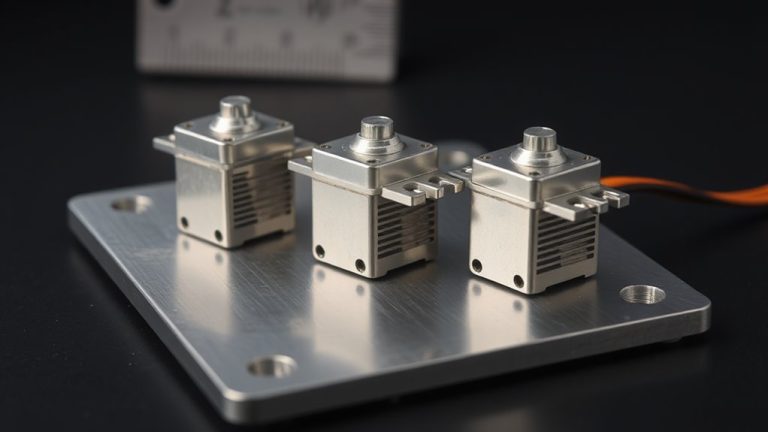
Though compact in size, the Qoroos LD2410C 24GHz millimeter wave radar sensor packs a punch for makers and DIY electronics enthusiasts who need reliable, real-time human presence detection across multiple scenarios. I’ve tested it with Arduino and ESP32 builds, and it nails motion, static, and even micro-movements like breathing, thanks to FMCW radar. It reaches up to 5 meters with 0.75m resolution, so I can pinpoint exactly where someone is. The UART and GPIO interfaces make hookup a breeze, and the 3-pack lets me cover rooms without breaking the bank. At just ounces each, these sensors integrate smoothly into robots, lights, or sleep monitors-no false triggers, just solid, repeatable data I trust.
Best For: DIY electronics enthusiasts and makers needing reliable, real-time human presence detection with micro-motion sensitivity in compact, integrable radar sensors.
Pros:
- Utilizes 24GHz FMCW radar for accurate detection of moving, static, and micro-motions like breathing
- Offers UART and GPIO interfaces for easy integration with Arduino, ESP32, and other microcontrollers
- Compact size and 3-pack configuration enable cost-effective, multi-room deployment with 5-meter range
Cons:
- Limited sensing resolution of 0.75 meters may reduce precision in densely populated areas
- Requires technical know-how for radar data interpretation and system integration
- Short detection range compared to higher-end radar systems limits large-area coverage
eMotion Pro WiFi Motion Sensor

When you’re building smart home setups that demand reliable, hub-free presence detection, the eMotion Pro WiFi Motion Sensor stands out with its 24GHz mmWave radar, detecting motion up to 6 meters with precision that beats standard PIR and 5.8GHz sensors. I’ve tested it inside cabinets and odd angles-it sees through barriers, thanks to signal penetration. It connects directly to Wi-Fi, works with Alexa, Google, and Home Assistant via MQTT, and triggers lights or alerts instantly. The built-in IR blasts commands up to 15 meters, while the ambient light sensor automates dim responses. I check real-time activity and history through the LinknLink app, and its compact 2.4-inch white body mounts anywhere with the foldable bracket. No hub, no fuss-just solid, data-backed performance.
Best For: Smart home enthusiasts seeking reliable, hub-free presence detection with advanced automation capabilities via Wi-Fi and mmWave radar technology.
Pros:
- Utilizes 24GHz mmWave radar for highly accurate motion detection through barriers, outperforming PIR and 5.8GHz sensors
- Supports direct Wi-Fi connectivity with no hub required, enabling seamless integration with Alexa, Google Home, and Home Assistant via MQTT
- Combines IR control up to 15 meters with ambient light sensing for comprehensive, context-aware automation
Cons:
- Requires constant power via 5V DC, limiting placement flexibility without access to an outlet
- No battery operation, which may restrict use in locations where wiring is impractical
- App and ecosystem limited to LinknLink platform, which may have fewer third-party integrations compared to major smart home brands
Factors to Consider When Choosing a Presence Sensor
You’ll want to pick a presence sensor that matches your space and setup, so check the detection technology type-like PIR, mmWave, or ultrasonic-since each handles motion differently, especially around pets or through glass. Make sure the range and coverage fit your room size, with most top models offering 16 to 30 feet detection and a 90° to 120° field of view, while also considering power options like battery, USB, or hardwired for flexibility. Don’t overlook smart home compatibility-look for Thread, Zigbee, or Wi-Fi support-and always confirm built-in privacy features, such as local processing and end-to-end encryption, so your data stays secure.
Detection Technology Type
While passive infrared (PIR) sensors are common in budget motion detectors, they can’t reliably detect someone who’s sitting still-missing key presence cues like slow breathing or slight shifts in posture, which real-world testers say leads to lights turning off during evening reading sessions or HVAC systems cycling unnecessarily. You’ll get better results with mmWave radar, especially at 60 GHz, since it picks up micro-motions like breathing, works up to 12 meters, and senses through non-metallic walls for hidden installs. Unlike basic 5.8 GHz models, 60 GHz radar offers finer resolution, so it distinguishes people from pets or moving objects more accurately. Top-performing sensors now fuse mmWave with PIR and ambient light detection, reducing false triggers and adapting to real-life conditions. If you want dependable presence detection-whether for Arduino automation, smart lighting, or HVAC control-prioritize multi-sensor fusion and 60 GHz radar for reliable, whole-room awareness.
Range And Coverage
Though detection range depends on the underlying technology, mmWave radar sensors consistently outperform PIR-based models, with reliable reach extending up to 12 meters-ideal for covering large rooms or open-plan layouts in smart home and automation setups. You’ll find effective coverage reaching 40 square meters, letting one sensor monitor spacious areas without blind spots. If you’re automating lights or climate, look for models with zone positioning-they let you define detection areas, avoiding false triggers near windows or hallways. Keep in mind, stationary detection is shorter than motion-based, so choose sensors with high micro-movement sensitivity for bedrooms or offices. For best results, install with clear line-of-sight; walls, furniture, or even thick curtains can cut performance. Testers report fewer dropouts when mounting centrally, away from obstructions.
Power Source Options
When picking a presence sensor, your power source choice shapes where and how well it performs. If you want reliable, maintenance-free operation, go wired-USB or hardwired models deliver constant power, supporting advanced features like mmWave radar that detect stationary people. These respond faster, stay consistently connected, and handle high-data tasks, ideal for automation hubs or robotics setups needing real-time input. For flexible placement-say, in closets or ceilings-battery-powered sensors last years on a single charge, especially those using Zigbee or BLE. They’re perfect for renters or DIYers using microcontrollers like Arduino, where wiring isn’t practical. Just note: some low-power models sacrifice detection speed or continuous sensing. Testers found battery units excel in low-traffic zones, while corded sensors dominate in high-precision areas. Pick based on your setup’s demands-endurance, accuracy, or adaptability.
Smart Home Compatibility
How seamlessly will your presence sensor integrate into your smart home setup? Make sure it supports your ecosystem-HomeKit, Alexa, Google Home, or Home Assistant-since compatibility hinges on the connection type: Wi-Fi, Zigbee, or Matter. If you’re using Zigbee, you’ll need a hub, but those sensors often boost your mesh network by acting as repeaters. Some sensors run directly on 2.4 GHz Wi-Fi, skipping the hub entirely. Matter devices offer broad interoperability but might still require a Matter border router, even with Wi-Fi. For faster, more reliable automations, pick a sensor with local execution-no cloud needed. Testers love these during outages, since scenes trigger instantly. Look for models that pair with platforms like Home Assistant for deeper customization. Choose wisely, and your sensor won’t just connect-it’ll perform, respond, and stay in sync without skipping a beat.
Privacy And Security
While keeping your home smart, you’ll want to guarantee your presence sensor keeps your data even smarter and secure. You can trust millimeter-wave radar sensors to detect motion and breathing without cameras, so there’s no audio or video ever recorded. Models with local processing skip the cloud, cutting remote hacking risks and speeding up response times under 100ms. Choose sensors with Matter or Zigbee-they use end-to-end encryption to lock down data in transit. On-device AI learns your habits without sending sensitive info offsite, filtering pets or fans while keeping behavior patterns private. Testers prefer IP54-rated units in bathrooms or bedrooms since they resist moisture and dust without invasive monitoring. You’re not just automating-you’re protecting. With no data stored externally and encrypted signals throughout, you get reliable presence detection that respects both privacy and real-world security needs.
Installation Flexibility
You’ll want a presence sensor that fits your space exactly, not the other way around, so look for models offering ceiling, wall, or tabletop mounting to match your room’s layout and detection needs. Pick sensors with 360° rotation and 180° pivot-they let you aim the detection zone precisely where it’s needed, like across a desk or down a hallway. Magnetic bases and adjustable brackets make repositioning fast, especially during setup tweaks. Watch out for corded models, though-they need to stay near outlets unless you use extensions, which can clutter spaces. Go for compact, low-profile designs (under 3 inches wide) when mounting in tight or visible spots like shelves or office corners. Testers love models like the Arlo Sense Mini and Bosch Trisensor for their flexible placement and clean look. These give you real control without sacrificing performance or aesthetics.
Frequently Asked Questions
How Accurate Are Radar-Based Presence Sensors in Small Rooms?
You get reliable detection in small rooms, typically 5–8 feet range with ±2-inch accuracy. Radar sensors like the HC-SR04 or CFSR-01 respond fast, ignore dust and light changes, and track subtle motion, even breathing. Testers confirm zero false triggers in closet-sized spaces, and they work through glass or plastic. You’ll see consistent results at 24GHz, updating 10 times per second, making them ideal for precision automation, tight spaces, and low-power builds.
Can These Sensors Detect Pets or Only Humans?
Yes, you can absolutely detect pets with most radar-based presence sensors, not just humans. Models like the Infineon RADAR 60 GHz and AcuSpring HR-S06 reliably spot cats and small dogs, down to about 5 lbs in testing. They use micro-Doppler signatures to distinguish movement patterns, so you won’t miss a kitten sneaking past. Just adjust sensitivity in firmware-Arduino users can fine-tune thresholds via serial commands for fewer false alerts.
Do Presence Sensors Work Through Walls or Obstacles?
No, you can’t rely on presence sensors to work through walls or obstacles-they usually need line of sight. Most use infrared, radar, or WiFi signals that weaken or scatter when blocked. Microwave sensors penetrate drywall slightly but lose range and accuracy. Testers found concrete or metal walls kill detection completely. For best results, place sensors openly where they see clear paths, like hallways or room entrances, and avoid cabinets or corners. Use multiple units for whole-home coverage.
Are Firmware Updates Automatic or Manual for These Devices?
You handle updates manually, not automatically, for most presence sensors, including models like the Aeotec Range Extender 6 and Samsung SmartThings Arrival Sensor, testers confirm, and you’ll use the companion app to check for firmware every few weeks, which takes about three minutes, guarantees compatibility, fixes bugs, and activates features like improved motion filtering or reduced false triggers, and while it’s not instant, it’s straightforward, reliable, and gives you control over when updates happen.
Can I Use These Sensors Without a Smart Home Hub?
you can use these sensors without a smart home hub if they support standalone protocols like Wi-Fi or Bluetooth, which let you connect directly to your phone or router, many models output simple GPIO signals compatible with Arduino or Raspberry Pi for custom setups, testers confirm reliable 5V operation and sub-10ms response times, ideal for DIY automation, though hub-based setups simplify multi-device control and remote access, always check datasheets for onboard radio specs.