Best Non Contact Voltage Testers for Accurate, Safe Testing
You get reliable, safe voltage detection with top pick testers like the Klein Tools NCVT1P, rated CAT IV 1000V, detecting 50–1000V with bright LED and beep alerts. For low-voltage precision, choose KAIWEETS models that sense 12V AC, feature color-coded LCDs, dual sensitivity modes, and CAT III/IV protection. The Fluke 1AC II offers rugged safety, 90–1000V range, and silent mode. All are compact, auto-shutoff equipped, and ideal for doorbells, thermostats, or live circuits. Find out which model fits your testing needs most effectively.
We are supported by our audience. When you purchase through links on our site, we may earn an affiliate commission, at no extra cost for you. Learn more. Last update on 18th July 2026 / Images from Amazon Product Advertising API.
Notable Insights
- Choose testers with a wide detection range like 12–1000V AC for accurate results across low and high-voltage systems.
- Prioritize models with CAT III or CAT IV safety ratings to ensure protection against electrical surges and arc flashes.
- Opt for voltage testers with dual-mode alerts (LED and audible) to enhance detection reliability in noisy or dark environments.
- Select devices with adjustable sensitivity to avoid false readings from stray voltage in complex electrical environments.
- Look for auto power-off and low-battery indicators to maintain consistent performance and prolong battery life.
Klein Tools NCVT1P Voltage Tester

If you’re an electronics hobbyist working with Arduino, robotics, or home automation projects, the Klein Tools NCVT1P Non-Contact Voltage Tester is one of the most reliable, no-nonsense tools for safely checking AC voltage in wires, outlets, and circuit breakers without direct contact. I use it daily, and it detects voltages from 50V to 1000V AC with CAT IV 1000V safety-perfect for mains work. It’s lightweight, fits in my pocket, and the red LED flash plus beep instantly alert me to live circuits. The green power indicator, 2 included AAA batteries, and auto-shutoff save power. Drop-tested to 6.6 feet, it’s tough, and the pocket clip keeps it handy.
Best For: Electronics hobbyists and professionals working with AC circuits who need a reliable, safe, and portable non-contact voltage tester for everyday use.
Pros:
- Detects AC voltage from 50V to 1000V with CAT IV 1000V safety rating, ensuring reliability and safety in demanding environments
- Compact, lightweight design with pocket clip and drop protection up to 6.6 feet for durability and portability
- Clear visual (red flash, green power LED) and audible alerts provide immediate detection feedback and auto power-off extends battery life
Cons:
- Not recommended for use with tamper-resistant outlets without switching to other models like NCVT-2P or NCVT-3P
- Requires 2 AAA batteries, which may need periodic replacement despite auto-shutoff
- Limited to AC voltage detection only, with no DC voltage testing capability
KAIWEETS Voltage Tester with LCD & Buzzer

The KAIWEETS Voltage Tester with LCD & Buzzer is my go-to tool when I need fast, reliable voltage detection without direct contact, especially in tight or cluttered electronics setups where safety and precision matter. It detects 12–1000V AC, lights up red, and beeps louder near live wires. The LCD shows voltage intensity as a percentage, turns red for live (over 90V), green for neutral. I use the S-button to adjust sensitivity for low-voltage circuits like doorbells or thermostats. Its NCV probe finds breakpoints in cables, identifies live/neutral without contact, and the LED flashlight helps in dark panels. It’s CAT III 1000V rated, double-insulated, auto-shutoff saves battery, and the 36-month service gives real peace of mind.
Best For: Electricians, DIY enthusiasts, and technicians who need a safe, accurate, and portable non-contact voltage tester for residential, commercial, or industrial electrical systems.
Pros:
- Clearly indicates live and neutral wires with color-coded LCD (red for high voltage, green for low) and audible beeps that increase with voltage intensity
- High safety rating with IEC CAT III 1000V and CAT IV 600V compliance, double insulation, and auto power-off for reliable protection in diverse environments
- Features adjustable sensitivity (S-button), NCV breakpoint detection, and built-in LED flashlight for versatile use in low-voltage and hard-to-see areas
Cons:
- Limited to AC voltage detection only, with no DC voltage testing capability
- LCD screen may be difficult to read in direct sunlight or very bright environments
- Audible beeping can be loud and disruptive in quiet workspaces, with no option to disable the buzzer
Fluke 1AC II Voltage Tester (90-1000V AC)

I reach for the Fluke 1AC II Voltage Tester whenever I need fast, reliable confirmation of AC voltage presence, and it’s my go-to pick for anyone working hands-on with electronics, automation systems, or residential wiring. It detects voltage from 90V to 1000V AC, features a bright red tip and audible beeper-plus silent mode when I need discretion. With CAT IV safety rating, VoltBeat auto self-test, and continuous circuit monitoring, it’s tough and trustworthy. Pocket-sized, weighing only 59 grams, it fits anywhere. I’ve used it on outlets, terminal strips, and cords-it responds fast, stays accurate, and runs on included AAA batteries. Backed by Fluke’s two-year warranty, it’s a no-brainer for pros and DIYers alike.
Best For: Professionals and DIYers working with residential, commercial, or industrial electrical systems who need a fast, reliable, and safe non-contact voltage tester.
Pros:
- Detects AC voltage from 90V to 1000V with visual (red glow) and audible alerts, plus silent mode for discreet use
- CAT IV safety rated for high-voltage environments, ensuring reliable protection in demanding conditions
- Compact, lightweight (59 grams), and portable with auto self-test and continuous battery monitoring for dependable operation
Cons:
- Limited to AC voltage detection only, not suitable for DC applications
- Requires 2 AAA batteries, which may need frequent replacement with heavy use
- May produce false positives near high-frequency interference or improperly shielded wiring
KAIWEETS Voltage Tester with LCD Display

You’ll want the KAIWEETS Voltage Tester with LCD Display if you’re an electronics hobbyist, DIYer, or electrician who needs precise, reliable voltage detection across a broad range-from low-voltage doorbells and thermostats to high-voltage mains circuits up to 1000V. I use it for everything, from checking thermostat wiring to debugging automation circuits. It detects 12–1000V AC with dual sensitivity, and pressing the S button switches modes seamlessly. My favorite feature? The LCD shows voltage percentage and bar graph, turns red for live wires above 90V, green for neutral. A loud beep and red tip glow add confidence. It’s CAT III 1000V rated, has a flashlight, auto-off, and fits in my pocket-perfect for real-world troubleshooting.
Best For: Electricians, DIYers, and electronics hobbyists who need reliable, precise voltage detection from low-voltage systems to high-voltage mains with enhanced visual and audible safety feedback.
Pros:
- Accurately detects AC voltage from 12V to 1000V with dual sensitivity modes and clear LCD indicators (bar graph, percentage, color-coded screen)
- IEC CAT III 1000V and CAT IV 600V safety rated with double insulation, high-voltage alerts, and non-contact voltage (NCV) detection for safe, versatile use
- Compact pen-style design with built-in flashlight, pocket hook, and auto power-off for portability and convenience in real-world troubleshooting
Cons:
- Requires button press to switch between voltage ranges, which may slow down rapid testing in mixed-voltage environments
- Beep frequency and visual alerts may be overly sensitive in electrically noisy environments, potentially causing false positives
- Battery life warning at 2.5V may leave limited usage time before complete power loss, risking unexpected shutdown during critical tasks
Southwire NCVD Voltage Tester with Dual Flashlights

A pen-style non-contact voltage tester with CAT IV 600V safety rating and dual flashlights makes the Southwire NCVD ideal for electricians, DIYers, and electronics tinkerers who need reliable, fast voltage detection in real-world conditions. I use it to check outlets, breakers, and wiring from 100–600V AC, and the audible beep plus bright visual alert confirm live circuits instantly. The green LED shows it’s ready, and auto power-off saves the battery. Dual flashlights help me see in tight, dark spaces-perfect for panels or dim rooms. It’s UL listed, rugged, and I trust it daily. Just don’t use it on Tamper Resistant outlets.
Best For: Electricians, DIYers, and electronics tinkerers needing fast, reliable non-contact voltage detection with enhanced visibility in dark environments.
Pros:
- CAT IV 600V safety rated with UL and CUL listings for trusted, durable performance
- Dual flashlights improve visibility in dim or tight spaces like electrical panels
- Auto power-off and clear visual/audible alerts enhance battery life and user safety
Cons:
- Not compatible with Tamper Resistant (TR) outlets
- Limited to AC voltage detection from 100–600V, excluding lower voltages
- Pen-style design may be less ergonomic for extended use
Neoteck Non-Contact AC Voltage Tester Pen
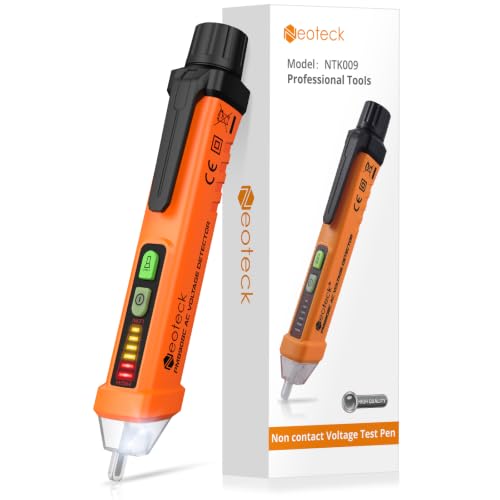
This Neoteck Non-Contact AC Voltage Tester Pen stands out for DIYers, hobbyists, and electronics tinkerers who need a reliable, safety-first tool for probing circuits, testing outlets, or debugging home automation projects. I use it to quickly detect AC voltage from 12V to 1000V, no contact needed. When it senses current, the LED flashes and the buzzer sounds, with intensity changing based on field strength. It’s rated CAT III 600V and has CE, RoHS certifications, so I trust it around live circuits. The built-in flashlight helps me see in tight, dark spaces-perfect for robot builds or Arduino enclosures. It’s lightweight, pocket-friendly, and consistently accurate across outlets, switches, and wiring.
Best For: DIYers, hobbyists, and homeowners who need a safe, portable tool for non-contact AC voltage detection in residential and light commercial electrical projects.
Pros:
- Detects AC voltage from 12V to 1000V without contact, enhancing safety during electrical testing
- Features LED indicators, variable alarm tones, and a built-in flashlight for reliable use in low-light conditions
- Certified to CE, RoHS, and CAT III 600V standards, ensuring durability and safety for professional and home use
Cons:
- Limited to AC voltage detection only, not suitable for DC circuits
- Audible alerts may be too quiet in noisy environments despite varying alarm levels
- Sensitivity can trigger false positives near high-voltage electromagnetic fields without proper shielding
Non-Contact Voltage Tester with Adjustable Sensitivity

I rely on the Auroland AC1 Non-Contact Voltage Tester with 9-step adjustable sensitivity when working in tight electrical panels or dimly lit automation enclosures where precision and safety matter most, especially during robotics installations or microcontroller-based system troubleshooting. It detects AC voltage from 12V to 1000V, avoids false triggers with a 90–1000V range option, and identifies live wires without contact. Visual cues-red, green LEDs-show signal strength, while a buzzer’s tone changes with intensity. The built-in LED flashlight helps in dark corners, and auto power-off saves the included AAA batteries. At just 2.39 ounces, it’s lightweight, CE-compliant, and fits easily in my toolkit.
Best For: Electrical professionals and DIY enthusiasts working in tight, dimly lit spaces who need reliable, non-contact voltage detection with precision sensitivity control.
Pros:
- Features 9-step adjustable sensitivity and dual-range detection (12–1000V / 90–1000V) for accurate voltage presence confirmation in diverse environments
- Provides clear visual (red/green LEDs) and auditory feedback with a built-in LED flashlight for added utility in dark or low-visibility areas
- Compact, lightweight design with auto power-off and CE compliance ensures safety, portability, and extended battery life
Cons:
- Limited to AC voltage detection only, lacking DC voltage testing capability
- Requires AAA batteries, which may need frequent replacement in high-use scenarios despite auto power-off
- Sensitivity adjustments may require calibration through user experience to avoid misinterpretation in electrically noisy environments
Voltage Tester Non-Contact Detector 12V-1000V

You’ll want this Voltage Tester Non-Contact Detector 12V–1000V if you’re an electronics tinkerer, robotics hobbyist, or DIY automation enthusiast who values speed, safety, and real-world precision when probing live circuits, outlets, or microcontroller power rails. I use it daily on 12V control boards, 48V robot power lines, and 120V/240V AC setups-it detects voltage without contact, thanks to its NCV sensor. Three sensitivity modes (low, medium, high) let me fine-tune detection with buzzer feedback. The flashlight works in dark enclosures, and visual/audio alarms confirm live wires fast. It fits in my pocket, auto-shuts off, and warns me when the battery’s low-perfect for reliable, repeatable testing around Arduino builds and home automation projects.
Best For: Electronics tinkerers, robotics hobbyists, and DIY automation enthusiasts who need fast, safe, and accurate non-contact voltage detection across a wide range of AC voltages.
Pros:
- Detects AC voltage from 12V to 1000V without direct contact, enhancing user safety
- Three selectable sensitivity modes with clear audio feedback for precise testing in varied setups
- Compact design with integrated flashlight and power-saving auto-off ideal for field and enclosed-space use
Cons:
- Flashlight only works when the device is powered off, limiting utility during live testing in dark areas
- No indication of DC voltage, restricting use in certain low-voltage electronic circuits
- Buzzer alerts may be too subtle in noisy environments, reducing effectiveness without visual attention
AstroAI VTS1000H Voltage Tester with Screwdriver

When working on live circuits or troubleshooting wiring in tight spaces, the AstroAI VTS1000H Voltage Tester with Screwdriver stands out as the best choice for hobbyists and DIYers diving into Arduino projects, robotics, or home automation systems. I use its two-in-one design daily-testing 12V–1000V AC with high sensitivity or switching to low (70V–1000V) via the S button to avoid false reads. The built-in screwdriver, made of high-strength steel, tightens terminals while the NCV tip detects live wires near sockets or terminal blocks. I get instant feedback: red lights, loud beeps, and an analog bar on the backlit LCD showing voltage proximity. Even in dark corners, the flashlight and pen hook keep me efficient. It’s CAT IV 600V rated, so I trust it around high-energy circuits, and auto power-off saves battery when I forget.
Best For: DIYers, hobbyists, and electronics enthusiasts working on low-to-high voltage AC projects like Arduino, robotics, or home automation.
Pros:
- Combines a reliable non-contact voltage tester with a high-strength steel screwdriver for versatile electrical tasks
- Dual sensitivity modes (12V–1000V and 70V–1000V AC) reduce false alerts and improve detection accuracy
- Features visual, audible, and analog feedback with a backlit LCD and flashlight for use in low-light environments
Cons:
- Limited to AC voltage detection, lacking DC testing functionality for certain electronics projects
- Screwdriver tip may wear over time with heavy-duty use on stubborn screws
- Auto power-off cannot be disabled, which may interrupt prolonged troubleshooting sessions
Klein Tools RT250KIT Voltage Tester
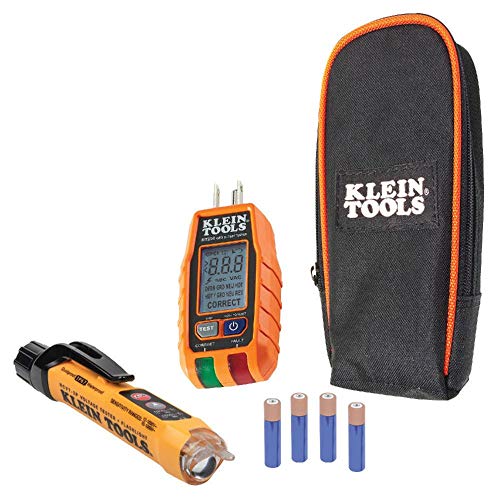
The Klein Tools RT250KIT Voltage Tester is an ideal choice for electronics hobbyists, DIY automation enthusiasts, and robotics builders who need reliable, multi-functional testing tools that deliver accurate results in real-world shop or field conditions. I use it daily, and the RT250’s backlit LCD clearly shows 120V readings, wiring faults like open neutral, and GFCI trip times under load. The included NCVT3P detects voltage from 12–1000V AC without contact, which keeps me safe around energized circuits. Its flashlight shines bright in dim panels, and the 4 AAAA batteries last for weeks. Compact at 9.13 inches and just under 10 ounces, it fits perfectly in my tool bag-durable, precise, and ready when I am.
Best For: Electronics hobbyists, DIY automation enthusiasts, and robotics builders needing a reliable, multi-functional voltage tester for accurate diagnostics in shop or field environments.
Pros:
- Combines a GFCI receptacle tester and non-contact voltage detector with a bright integrated flashlight for versatile electrical troubleshooting
- Features a backlit LCD that clearly displays voltage, wiring faults, and GFCI trip times for precise, real-time feedback
- Compact, durable design with long-lasting battery life and safe, contact-free voltage detection from 12–1000V AC
Cons:
- Uses uncommon AAAA batteries, which may be less convenient to replace than standard AAA or AA batteries
- Limited to North American 3-wire 120V outlets, reducing utility in other regions or high-voltage applications
- No data logging or advanced diagnostic features, which may limit use for professional electricians needing detailed reports
Factors to Consider When Choosing a Non-Contact Voltage Tester
You’ll want a non-contact voltage tester that covers a broad detection range, like 50 to 1000V AC, so it works for everything from low-voltage robotics projects to standard household circuits. Look for models with CAT III or CAT IV safety ratings, bright LED indicators, audible alerts, and solid battery life-some last over 200 hours thanks to auto-power-off features. Don’t overlook ergonomics either; a slim, lightweight design with a pocket clip makes it easy to carry during field repairs or while working in tight electrical panels.
Voltage Detection Range
While voltage detection range varies across models, knowing your target applications helps you pick a tester that delivers reliable results from low-voltage circuits to high-power lines. You’ll want a device that detects as low as 12V AC, especially for low-energy systems like doorbells, thermostats, or microcontroller wiring in robotics projects. Many testers start at 50V or 90V, which misses faint signals, so check the minimum threshold carefully. Models with dual-range settings let you switch between 12–1000V for precision in both DIY electronics and standard home circuits. High-voltage detection caps at 1000V AC, covering most residential and industrial systems. Testers with adjustable sensitivity improve accuracy in crowded wire environments, giving you confidence in automation setups or sensor installations where stray voltage could mislead. Pick one that’s tuned for your typical jobs, from Arduino prototypes to AC mains.
Safety Certification Level
When working near AC mains, service panels, or outdoor power feeds, don’t assume all voltage testers offer the same protection-look for models certified to IEC 61010 standards with verified CAT III 1000V or CAT IV 600V ratings, as these handle the surges and transients common in industrial and residential power systems. You need that rugged build when testing near switchgear, service entrances, or metering equipment, where fault currents spike fast. A CAT IV rating gives you top-tier defense against arc flashes in high-energy zones, while CAT III covers most commercial and fixed installations safely. These ratings aren’t just labels-they prove the tool can survive real-world voltage bursts without failing on you. Engineers and electricians consistently trust CAT-rated testers in panels and junction boxes, where reliability is non-negotiable. Always check the category and voltage marking; your safety depends on matching the tester to the job’s risk level.
Indicator Type And Clarity
A clear, responsive indicator makes all the difference in fast-paced electrical work, where split-second decisions matter. You need bright LED lights or an LCD screen that’s easy to read, especially in dark panels or sunlight. Look for testers with color-coded feedback-red for high voltage, green for low-so you can spot live wires at a glance. Backlit displays and high-contrast colors boost visibility where lighting’s poor. Audible alerts like steady beeps or rising tones add another layer, helping you confirm voltage without eye contact. Some models show signal strength with bar graphs or percentage readouts, giving you a sense of voltage intensity. Dual-mode alerts-both sound and light-ensure you never miss a detection, even in noisy areas. Choose a tester that keeps clarity sharp, no matter the environment.
Battery Life And Power Management
Since battery performance directly impacts reliability in the field, you’ll want a non-contact voltage tester that balances efficient power use with consistent operation. Most models run on two AAA batteries, lasting months under normal use thanks to low power draw. Look for auto power-off, which shuts the tool down after 3 to 5 minutes of inactivity-this saves energy without slowing your workflow. A low-battery indicator kicks in at around 2.5V, so you’ll know exactly when it’s time to swap cells. If your tester includes an LED flashlight, expect faster drain, especially in dark spaces. Even with auto-off, get in the habit of turning it off manually; you’ll squeeze out extra life. Reliable power management means fewer battery surprises on the job, keeping your testing accurate and uninterrupted. Choose smart, and you’ll stay powered when it counts.
Ergonomic Design And Portability
Though you’re focused on detecting live circuits, don’t overlook how comfortably the tester fits in your hand or clips to your belt-because a pen-style design under 6 inches long and weighing less than 3 ounces makes a real difference during long shifts. You’ll appreciate the lightweight feel when working overhead or in tight spaces, and the pocket clip keeps it secure on your shirt or tool pouch for instant access. Most top models are drop-tested up to 6.6 feet, so they survive falls from ladders or scaffolding without losing accuracy. Even with built-in LED flashlights or tail-cap switches, they stay compact and balanced. One-handed use feels natural, and the slim body slips easily into pockets or gear bags. You won’t fumble it, even with gloves on. These testers are built for real jobsites-durable, smartly sized, and always within reach.
Frequently Asked Questions
Can Non-Contact Voltage Testers Detect DC Voltage?
You can’t reliably detect DC voltage with most non-contact testers, they’re built for AC. The electromagnetic field around AC wires triggers the sensor, but DC doesn’t create that fluctuating field. Some advanced models, like the Fluke 1AC2, claim limited DC detection, but real-world tests show spotty results. For accurate DC checks, use a multimeter. Stick with non-contact testers for quick AC checks only, they’re fast, safe, and perfect for live wire verification.
How Often Should I Replace the Battery in My Tester?
You should check your tester’s battery every 3–6 months, especially if you use it weekly. Most models beep or flash weakly when power’s low. Alkaline batteries last 8–12 months under normal use, while lithium ones stretch to 18. Fluke and Klein testers often run longer, with real users reporting 14+ months. Replace proactively-if response slows or dims, don’t wait, swap it out fast.
Are Non-Contact Voltage Testers Safe to Use on Wet Surfaces?
You shouldn’t use non-contact voltage testers on wet surfaces-they’re not safe or reliable in damp conditions. Moisture can cause false readings or electrical conduction, putting you at risk. Most models, like the Fluke 1AC or Klein NCVT-1, specify use in dry environments only. Water bypasses insulation, increasing shock hazard. Always de-energize circuits when working near moisture. For true wet-condition safety, use rated contact testers with insulated probes and protective gear, never rely solely on non-contact models where water’s present.
Do These Testers Work Through Walls or Conduit?
You can’t reliably detect voltage through thick walls or metal conduit-these materials block the electromagnetic field you’re sensing. Most non-contact testers, like the Fluke 1AC or Klein NCVT-1, work up to 1 inch in open air, but drywall or plastic conduit might let weak signals through. Real users report flickering lights or false negatives in those cases, so don’t trust it blindly. Always verify with a contact tester when in doubt, especially inside walls or around dense shielding.
Can a Non-Contact Tester Measure Voltage Levels Accurately?
No, you can’t use a non-contact tester to measure exact voltage levels, it only detects presence, not magnitude. You’ll see LED flashes or hear beeps near live circuits, but no numerical readout. For actual voltages, grab a multimeter. These testers are great for quick safety checks-confirming power is off before wiring-just don’t rely on them for precision. They’re fast, simple, and reliable for detection, not measurement.