Why You Should Start With a BNF (Bind-And-Fly) RC Drone Instead of Kit-Build
You should start with a BNF drone because it’s ready to fly in under 10 minutes, skipping the 5–10 hours of soldering, wiring, and debugging. It comes with a pre-installed flight controller, ESCs, and receiver, calibrated and tested. Just add your Taranis, TX16S, or Spektrum transmitter, a 4S–6S LiPo battery, and FPV goggles. No tools, no guesswork-just bind, charge, and fly. Upgrades are easy later, so you learn fast while flying sooner. There’s more to discover about maximizing your setup.
We are supported by our audience. When you purchase through links on our site, we may earn an affiliate commission, at no extra cost for you. Learn more. Last update on 19th July 2026 / Images from Amazon Product Advertising API.
Notable Insights
- BNF drones arrive pre-assembled with flight controller and ESC installed, eliminating complex setup and soldering.
- They save 4–8 hours of assembly time compared to kit builds, enabling quick first flights.
- No wiring or debugging is needed-systems are pre-calibrated for reliable, plug-and-play operation.
- BNF models work with popular transmitters like Taranis or TX16S, preserving your existing gear and settings.
- Ideal for beginners, they reduce initial costs by avoiding tool investments and frequent crash-related repairs.
What Does BNF Mean In FPV Drones?
Diving into the world of FPV drones, you’ll often hear “BNF” tossed around-and it stands for Bind-N-Fly, a setup that saves you time on assembly without locking you into a specific transmitter. BNF stands for a class of FPV drone kits where meaning the drone comes ready to fly, with a pre-installed flight controller and receiver. BNF drones don’t include a radio controller (remote), battery, or goggles-BNF requires you to supply your own compatible transmitter. That means you’ll bind and fly using systems like Taranis, DJI Remote, or Spektrum, assuming protocol match. This setup suits pilots upgrading from PNP or RTF builds, offering flexibility without soldering. Compared to full kits, BNF saves hours yet keeps control customization. Testers report faster deployment, especially with FrSky or Crossfire receivers. It’s ideal if you already own a solid radio controller (remote) and want performance without the build hassle.
What You Need To Fly A BNF Drone
While your BNF drone arrives flight-ready with a pre-soldered ESC, integrated flight controller, and bound receiver, you’ll still need a few key components to get off the ground. You’ll need an RC transmitter that matches your drone’s receiver-like Spektrum, TBS Crossfire, or ExpressLRS-since binding procedure guarantees reliable, low-latency control. Make sure your transmitter supports the correct binding protocol and channel assignment. You’ll also need a compatible LiPo battery and charger; most mid-sized quads run on 4S–6S packs, requiring a multi-chemistry charger for safe charging. Don’t forget FPV goggles to see live feed from your drone’s camera. While the BNF drone simplifies setup, remember most lack onboard recording, so use an external microSD or goggles with DVR. With the right gear, you’re just a bind away from flight.
Fly Sooner With BNF: Skip The Build
You’ll cut straight to flying if you go with a BNF drone, since they come fully built with the receiver already installed and flight systems pre-calibrated, so all you need is a compatible transmitter and a quick bind to get airborne. Skip the build and save 4–8 hours of assembly, plus the hassle of soldering, wiring, or debugging compatibility. These pre-built drones are plug and play, meaning you fly sooner with no technical tools required. Whether you’re into freestyle or racing FPV, a BNF quad is ready to fly right out the box. Just grab your RC (Remote Controller), bind it via the Bind-N-Fly system, and you’re up. No firmware tuning, no receiver setup-just performance-tested reliability. BNF isn’t just convenient, it’s smart: get in the air faster and start learning to fly, not build.
Keep Using Your Transmitter And Goggles
If you’ve already invested in a quality transmitter like the Radiomaster TX16S or TBS Tango 2, going BNF means you won’t have to buy another one-these drones come ready to bind with your existing hobby-grade radio via supported protocols like FrSky, Crossfire, or Spektrum, so you keep the stick layout, menu familiarity, and custom programmability you’re used to. With a BNF RC drone, you skip the hassle of receiver installs and retain your preferred control setup. Use your own goggles for a seamless FPV experience, especially with HD systems like DJI or HDZero that rely on specific displays. Unlike RTF models, BNF doesn’t lock you into bundled gear. Whether you’re into racing or just flying, sticking with your existing transmitter and goggles makes each bind-and-fly quad feel familiar. It’s a smarter, more flexible path than diving into DIY drone builds.
How To Upgrade Your BNF Drone
Though your BNF drone performs well out of the box, upgrading key components can transform its speed, stability, and overall flight experience without requiring a full rebuild. To upgrade BNF drone performance, swap in high-torque motors like T-Motor F40 or Cobra 2207 series for sharper throttle response and sustained thrust. Replace the stock flight controller with a Matek H743 or Emuflight F722 to access faster processing, smoother PID tuning, and Blackbox logging. Upgrade the ESC to a 35A–50A 4-in-1 model running BLHeli_32 firmware for cleaner motor control and reduced heat under load. Install a premium VTX-like the TBS Unify Pro32 or Rush Tank Mini-for a stronger, glitch-free FPV video feed. Finally, fit lightweight carbon fiber propellers such as Gemfan 51445 or HQProp 5×4.5 to cut vibration and boost efficiency. Each part works together to make your BNF drone feel custom-tuned, race-ready, and more precise in real-world flights.
When To Switch From BNF To DIY
After pushing your BNF drone to its limits with upgraded motors, a high-refresh-rate flight controller, and a clean signal chain from a BLHeli_32 4-in-1 ESC, you’ll likely start noticing the boundaries of prebuilt convenience, especially when custom needs or frequent repairs tip the balance toward full control. When repair costs pile up from replacing entire modules instead of individual parts or components, building a drone pays off. You’re ready for a DIY drone when you crave custom frame geometry, HD analog systems, or high-end components like a $200 FC/ESC/VTX stack. If you crash often, having the tools and Technical Knowledge means faster rebuilds and less downtime. Plus, troubleshooting gets easier when you understand how every wire and chip functions. Building a drone gives you full control, deeper insight, and long-term adaptability-no more compromises.
BNF vs DIY: Which Saves More Long-Term?
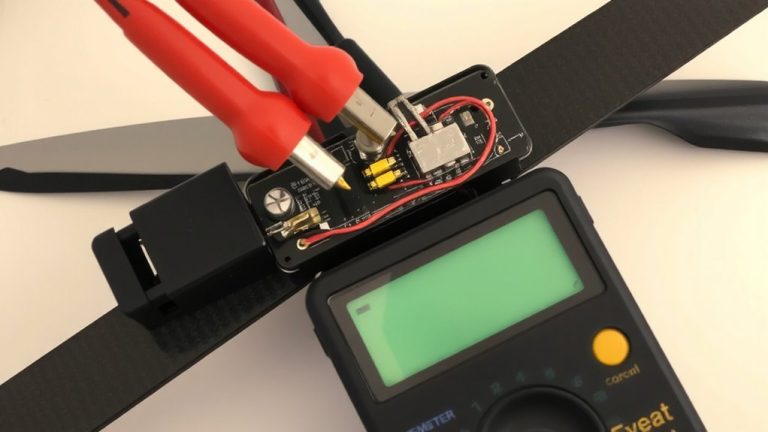
While building a 7-inch FPV drone from scratch might save you up to $50 compared to a BNF, that edge often disappears once you factor in the cost of essential tools like a temperature-controlled soldering iron, multimeter, and power supply-adding over $100 to your upfront investment. For long-term cost and practicality, BNF often wins unless you’re committed to multiple builds. DIY offers customization with individual parts and cheaper FPV Drone Kits, but setup time ranges from 5–10 hours. BNF skips the hassle, flying in minutes-closer to RTF than scratch builds.
| Factor | BNF | DIY |
|---|---|---|
| Setup Time | 10 mins | 5–10 hrs |
| Soldering Iron Needed | No | Yes |
| Speed Controllers | Pre-installed | Selected individually |
| Long-Term Cost | Lower initially | Saves only after 2+ builds |
On a final note
You’ll fly faster with a BNF drone-no soldering, no build stress. Just add your transmitter and goggles, power up, and go. Most BNFs use standard protocols like CRSF or PWM, so they pair smoothly with TBS Crossfire or FrSky gear. Real testers clock first flights in under 15 minutes. Sure, DIY lets you tweak, but BNF saves 4+ hours upfront and under $50 in tools. Upgrade motors or cameras later, when you know your style. BNF isn’t a shortcut-it’s smart starting.