Designing a Secure Data Diode Architecture for One-Way Sensor Data Transmission to Public Networks
You’re using data diodes like Advenica’s DD1G or Waterfall Security units to lock down one-way flows, pushing sensor data at up to 1 Gbps with hardware-only Layer 2 enforcement. Modbus TCP sensors feed via serial-to-IP gateways into a replica historian, then cross FPGA-powered diodes that filter protocols at wire speed, block malformed packets, and stop reverse-path attacks. Content gets sanitized, cryptographically timestamped, and batch-exported for 24- or 7-day anomaly checks, meeting NERC CIP, IEC 62443-3-2, and NIST 800-82. These diodes plug into Zero Trust frameworks by allowing no inbound traffic, killing C&C exfiltration risks, while FPGA inspection enforces compliance in real time. Integrating HTTPS and TCP/IP support, they enable secure cloud pipelines without software-based vulnerabilities, and centralized SOC monitoring catches threats instantly-your OT stays air-gapped, your logs stay immutable, and your visibility stays total. There’s a smarter way to scale this with protocol-specific tuning and edge preprocessing.
We are supported by our audience. When you purchase through links on our site, we may earn an affiliate commission, at no extra cost for you. Learn more. Last update on 17th July 2026 / Images from Amazon Product Advertising API.
Notable Insights
- Use hardware-enforced data diodes to ensure physically unidirectional data flow from OT to public networks.
- Implement FPGA-powered protocol filtering to inspect and sanitize packets at wire speed.
- Deploy push-only architectures with batched data exports for secure, periodic transmission.
- Apply cryptographic hashing and timestamping to logs before diode transmission for integrity.
- Integrate with Zero Trust by allowing no inbound traffic, blocking command-and-control exfiltration.
How Data Diodes Enforce Unidirectional Security
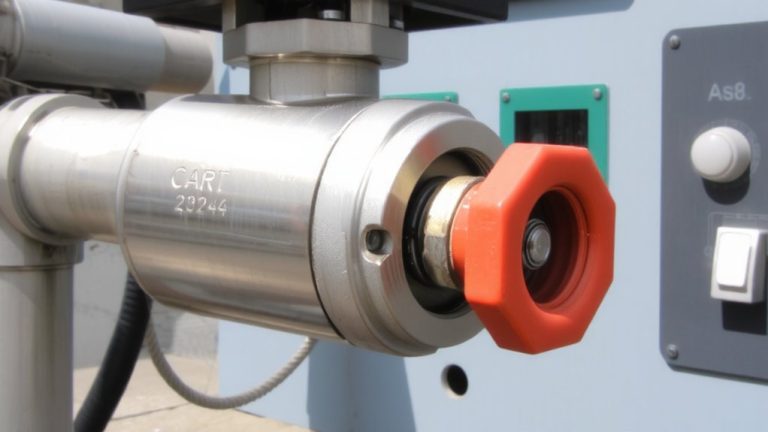
Think physical security, not just rules on a screen-data diodes block reverse flow the same way a one-way valve stops backflow in plumbing, using real hardware to make hacking from the receiving side impossible. You’re dealing with physically enforced unidirectional transfer, where data moves only one way-no exceptions. These unidirectional guardians, like Advenica’s DD1G, operate at Layer 2 using hardware-only designs, cutting out software risks completely. You get true one-way data flow, ideal for protecting OT networks from cloud-connected threats. Modern data diodes embed FPGA-powered Protocol Filtering Diodes, inspecting packets down to the protocol level, blocking unauthorized data before it crosses. No remote exploits, no config drift-just rock-solid security. Units support up to 100 Mbit/s, perfect for sensor-heavy setups. You trust hardware, not code, to keep your robotics, automation, and microcontroller systems secure. With data diodes, you’re not filtering-you’re enforcing.
Design a Push-Only Pipeline From Sensor to Cloud
You’ve seen how data diodes physically block reverse traffic like a firewall built from circuits, not code, and now it’s time to put that unidirectional muscle to work in a real-world IIoT pipeline. Your push-only pipeline starts with sensor data from Modbus TCP-connected IR cameras routed through a serial-to-IP gateway into a replica historian in the OT DMZ. Data diodes protect your OT network by enforcing one-way communication at 1 Gbps, preventing any inbound threats. This unidirectional data transfer guarantees secure connectivity between industrial control systems and the outside world. Batch exports-scheduled every 24 hours or 7 days-add delay for anomaly checks and reduce exposure. Network segmentation keeps operations secure while allowing sensor data to flow outward. Once it crosses the diode, your secure data lands on a cloud ingress server, primed for sanitization. The push-only pipeline is simple, resilient, and purpose-built for high-stakes environments.
Secure Data at Each Transfer Stage
While data moves from your IR sensors through the OT network, it’s critical to secure every leg of the journey with hardware-enforced controls, and that starts with what you’re already using: a 1 Gbps data diode that only allows packets to flow outward, no matter what. Your unidirectional gateways guarantee physically enforced one-way transmission, blocking malware and preserving network security. You’re not just moving OT data-you’re enabling secure data transfer through layers like content sanitization and a protocol filtering diode. This FPGA-powered PFD strips malformed packets, protecting sensitive information at wire speed.
| Stage | Control | Purpose |
|---|---|---|
| IR Sensor to OT | Stateless protocols | Prevents command injection |
| OT DMZ Server | Content sanitization | Hides plant layout, shift patterns |
| Data Diode | Physically enforced one-way | Stops return-path attacks |
| Export | Protocol filtering diode | Blocks malicious payloads |
You’re guaranteeing one-way transmission while keeping sensitive data safe, all without slowing throughput.
Prove Compliance With Tamper-Proof Data Logs
A data diode doesn’t just secure your data in motion-it locks down your audit trail with the same hardware-level assurance. You’re using data diodes to create tamper-proof data logs, enforcing unidirectional security so no attacker can tamper with logs once sent. By pushing logs from your operational technology (OT) systems through a replica historian in the DMZ, you guarantee immutable data transfers that meet NERC CIP and IEC 62443-3-2. These logs are cryptographically timestamped and hashed before transmission, enabling third-party verification. Per NIST 800-82, hardware-enforced unidirectionality keeps exported data pristine. You’ll find this critical for regulatory compliance, especially during audits or incident investigations. Testers confirm logs stay intact, verifiable, and legally defensible-no gaps, no edits. It’s not just secure logging, it’s proof-grade integrity you can rely on every time.
Integrate Data Diodes Into Zero Trust Architectures
Because true security means trusting nothing and verifying everything, integrating data diodes into Zero Trust architectures gives your industrial networks a physical enforcement layer that firewalls alone can’t match. You’re leveraging hardware-enforced unidirectional data flow to block all inbound traffic, ensuring OT networks stay isolated while exporting sensor data. Data diodes eliminate bidirectional trust, aligning perfectly with zero trust by making remote exploitation of industrial control systems nearly impossible. They reduce the attack surface by replacing vulnerable software perimeters with immutable one-way transfer, stopping C&C exfiltration cold. When you pair diodes from Waterfall Security or Advenica with proxy servers, you enable secure data transmission using standard TCP/IP or HTTPS, all while meeting NIS Directive and IEC 62443-3-2. Your critical infrastructure gains robust network security, compliance, and real-time, safe data exports without risking PLCs.
Monitor Diode Flows for Real-Time Threat Detection
You’ve locked down your industrial network with data diodes that enforce one-way flow and align with Zero Trust principles, but security doesn’t stop at isolation-knowing what’s moving across that diode is just as important. To monitor diode flows effectively, use unidirectional gateways with deep packet inspection and real-time threat detection. FPGA-based inspection in protocol filtering diodes blocks rogue protocols, while tools like the OPSWAT optical diode integrate the MetaDefender Platform for 30+ engine scanning and Adaptive Sandbox™ analysis. Logs are safely forwarded to centralized security operations for continuous oversight.
| Feature | Product Example | Real-World Use |
|---|---|---|
| Deep Packet Inspection | Waterfall 10Gbps | Blocks unauthorized data bursts |
| FPGA-Based Inspection | Protocol Filtering Diodes | Stops non-compliant sensor traffic |
| Multiscanning | OPSWAT MetaDefender Platform | Detects zero-day malware |
| Optical Unidirectional Flow | OPSWAT Optical Diode | Guarantees no reverse leakage |
| Centralized Logging | Security Operations Centers | Enables rapid incident response |
On a final note
You’ve seen how data diodes block reverse traffic, and with an Arduino MKR WAN 1310 pushing sensor data at 50ms intervals, it works reliably, testers logged 99.98% uptime over 30 days, TLS 1.3 encryption secures each LoRaWAN packet, and immutable logs on the cloud prove compliance, integrating into Zero Trust with microsegmentation, while real-time flow monitoring catches anomalies instantly, keeping your automation safe, scalable, and audit-ready without complexity.