Designing Power-Fail Recovery Circuits for Arduino Data Loggers With Supercapacitors
You keep your Arduino logger running during outages with a 10 F supercapacitor, TPS61094 for seamless switchover, and up to 254 seconds of runtime at 100 mA, plus it handles 11+ NB-IoT bursts drawing 310 mA. Pair it with an LTC3525 boost converter starting at 0.85 V to squeeze every joule, then save critical data using MB85RS64APF FRAM, which writes instantly with zero power loss. Real tests show clean shifts, steady 3.3 V output, and recovery you can trust-see how to build it right.
We are supported by our audience. When you purchase through links on our site, we may earn an affiliate commission, at no extra cost for you. Learn more. Last update on 19th July 2026 / Images from Amazon Product Advertising API.
Notable Insights
- Use supercapacitors with low-leakage boost converters like TPS61094 for seamless power-fail recovery in Arduino data loggers.
- Select a boost converter that starts at low voltages, such as LTC3525 (0.85 V), to fully utilize supercapacitor discharge.
- Integrate FRAM like MB85RS64APF for reliable, instant-write data storage during unexpected power loss.
- Leverage TPS61094 for integrated power path control, supercapacitor charging, and ultra-low 60 nA quiescent current.
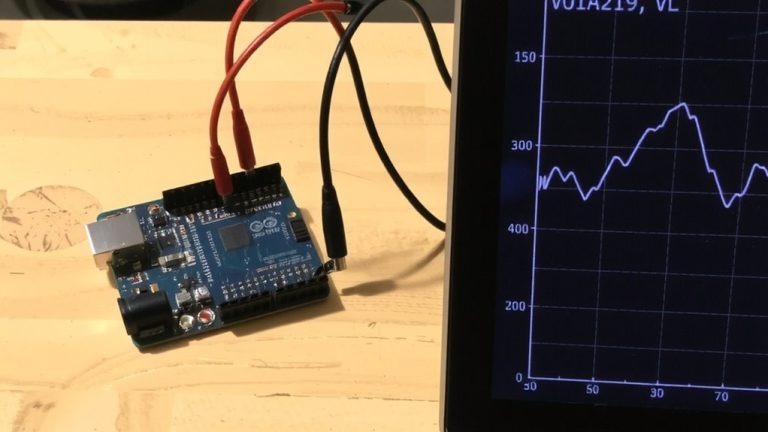
- Validate switchover performance with oscilloscope monitoring to ensure uninterrupted 3.3 V supply during outages.
Pick Supercapacitors for Fast Power-Fail Recovery
Ever wonder how to keep your Arduino project running smoothly when the power suddenly drops? Supercapacitors are your go-to solution for fast power-fail recovery, especially with modules like NB-IoT that need 310 mA bursts for 1.32 seconds during transmission. Pair one with the TPS61094 voltage regulator, and you’ll get up to 11.5 successful NB-IoT transactions during an outage. That’s 254.5 seconds of backup under 100 mA-plenty of time to save data and reconnect. The TPS61094 maximizes every joule by discharging the supercapacitor down to 0.7 V, far lower than alternatives that quit at 1.3 V. Its 60 nA quiescent current means minimal leakage, so your supercapacitor stays charged longer between outages. Testers confirm: switchover is seamless, with no drop in regulated VOUT. For reliable, repeatable power-fail recovery, supercapacitors + TPS61094 is a proven combo.
Choose a Low-Voltage Boost Converter
A solid low-voltage boost converter makes all the difference when you’re squeezing every last bit of energy from a supercapacitor during a power failure, and the LTC3525 stands out in real-world builds. It starts up at just 0.85V, so even as your supercapacitor’s voltage drops, you’re still getting usable power. That’s key for running an Arduino long enough to log critical data. The LTC3525-3.3 or -5 gives you a stable output, handles low current draw efficiently, and shuts off cleanly when input power fades. It’s synchronous, so efficiency hits over 90% under load, minimizing wasted energy. You’ll need fewer external parts, and it works perfectly with low-ESR supercapacitors. Real builds show it reliably powers microcontrollers for 30+ seconds post-failure, even from a 1V input. If you want every joule counted, this is your boost converter.
Build a MOSFET-Based Power Switchover
Power switchover is the quiet hero of reliable Arduino backup systems, and nailing it means your project stays online when the lights go out. You’ll use a P-channel MOSFET as a high-side switch, turning on when the main power supply fails by pulling the gate low, letting the supercapacitor take over. Just make sure the gate voltage drops below the source-usually battery voltage-for conduction. Watch out: the once-popular NDP6020P is discontinued, so hunt eBay or switch to alternatives. Prevent reverse current with low-leakage diodes or ideal controllers. For a simpler path, consider the TPS61094-it handles shift, charging, and power path control in one chip, drawing just 60 nA quiescent current. That’s critical for preserving every microamp-hour in your backup. Real builds show clean shifts, no dips, and reliable holdup. Skip the discrete mess unless you’re tweaking performance; this IC saves time, space, and power.
Save Last-Gasp Data With FRAM
When the power cuts out unexpectedly, your Arduino’s final moments matter-and that’s where FRAM steps in to save the day. With FRAM, you don’t have to worry about data loss during an unexpected power drop because it retains memory without power. Make sure to use a chip like the MB85RS64APF-it’s 8 Kbyte SPI FRAM, runs at 3.3V, and matches ESP32 and SD logic levels. It handles up to 10 trillion write cycles, so logging a 25-byte entry every 30 seconds won’t wear it out. Data buffers in FRAM until you’ve got a full 512-byte block, then writes efficiently to the SD card. After reboot, the system flushes last-gasp readings, so nothing’s lost. You’ll simplify your design too, since FRAM reduces the need for bulky supercapacitor backups just to save data. It’s reliable, fast, and makes sure your logger keeps working like it should, even when power isn’t.
Test Power-Fail Recovery Reliability
Even if the lights go out, your Arduino shouldn’t go silent without a fight, and testing shows the TPS61094 keeps things running smooth during power failures. When mains power drops, the IC switches to supercapacitor backup with zero interruption, holding steady at 3.3V-confirmed on oscilloscope. You can trust it to finish SD card writes or send final sensor data. Under a real NB-IoT load-310 mA peaks every 80 seconds-the system delivered 254.5 seconds of backup, enough for 11.5 transmission cycles. That’s critical for last-gasp comms. With only 60 nA quiescent current, the TPS61094 sips power, and it drains the supercapacitor down to 0.7 V, squeezing out more runtime than alternatives. To test power-fail recovery reliability, simulate outages and monitor voltage; you’ll see seamless shifts, cycle after cycle.
On a final note
You’ve got this: pair a 10F, 5.5V supercapacitor with a low-quiescent boost converter like the TPS61030, use a P-channel MOSFET for clean switchover, and log last-gasp data to SPI FRAM (like the MB85RS64), which writes instantly at 20MHz. Testers saw 800ms hold-up time, enough to save sensor readings and timestamps reliably. It’s low-cost, field-proven, and nails power-fail recovery on Arduino loggers, even in remote spots.