Deploying Arduino MKR Series Boards in Harsh Environments With Extended Temperature Range
You can keep your MKR board stable from -40°C to +85°C by choosing rugged models like the MKR WAN 1310 or pairing the MKR Zero with the MKR ENV Shield, using DS18B20 sensors for accurate cold-weather reads, adding a 100nF capacitor to prevent DHT22 “nan” errors, powering it with a protected LiPo battery, and enclosing everything in a ventilated, UV-resistant case with industrial microSD storage-there’s a smarter way to log data when conditions get tough.
We are supported by our audience. When you purchase through links on our site, we may earn an affiliate commission, at no extra cost for you. Learn more. Last update on 13th July 2026 / Images from Amazon Product Advertising API.
Notable Insights
- Use MKR WAN 1310 or Arduino Edge Control for reliable operation from -40°C to +85°C in extreme conditions.
- Pair DS18B20 sensors with MKR boards for accurate readings down to -55°C and up to +125°C.
- Add a 100nF capacitor to stabilize power and prevent sensor failures during cold-induced voltage drops.
- Deploy MKR Therm Shield with Type K thermocouples for precision measurements from -200°C to +700°C.
- Use ventilated, UV-resistant enclosures with industrial microSD cards to ensure durability in harsh outdoor environments.
Why Arduino Setups Fail in Extreme Conditions
While the Arduino MKR series is built for rugged applications, it can still stumble in extreme environments if key hardware limits aren’t accounted for. You might rely on temperature and humidity sensors like the DHT22, but they’re only rated from -40°C to +80°C-beyond that, you’ll get unreliable environmental data or “nan” readings. Cold weather also hits battery life hard; 3.7V LiPo cells drop voltage below 0°C, causing crashes, especially on the MKR Zero with its unregulated analog inputs. High humidity? Without conformal coating, jumper wires and breadboards corrode, disrupting signals. Even the Arduino MKR ENV shield can underperform if enclosed poorly-no ventilation means condensation and overheating. Power consumption spikes during sensor reads, so unstable power leads to false data. For reliable results in extreme temperatures, you’ve got to buffer power, protect connections, and check sensor specs closely.
Pick the Right MKR Board for Harsh Environments
When you’re deploying electronics in extreme conditions, choosing the right MKR board isn’t just about features-it’s about matching specs to real-world stress. If you need extended temperature range and industrial-grade reliability, go for the MKR WAN 1310-it’s rated from -40°C to +85°C with proper shielding. While the Arduino MKR Zero works in harsh environments with protective enclosures, its standard 0°C to 50°C limit isn’t enough alone. Instead, pair it with the MKR ENV Shield-its sensors handle -40°C to +120°C, boosting outdoor resilience. For even tougher setups, consider the Arduino Edge Control, a ruggedized board built for the same conditions, operating reliably from -40°C to +85°C. Always check external components, like the DS18B20’s -55°C to +125°C range, to guarantee your whole system survives.
Measure Extreme Temperatures With MKR Shields
You’ve picked your MKR board to handle extreme conditions-whether it’s the rugged MKR WAN 1310 or the Edge Control with its industrial temp rating-now it’s time to start measuring those extremes with precision. The MKR Therm Shield is equipped for the job, supporting a wide temperature range from -200°C to +700°C using a Type K thermocouple, ideal for industrial or outdoor systems. It works seamlessly on the Arduino platform, delivering high-precision data without complex wiring. The shield is equipped with sensors including a DS18Bxx digital one-wire sensor for ambient monitoring, accurate to ±0.5°C. Testers found stable readings even in fluctuating environments, like furnaces and remote farms. With plug-and-play design and a dedicated library, adding reliable sensors to your MKR setup is fast and accurate, making extended range temperature logging simple, robust, and real-world ready.
Keep Your MKR Logger Running on Battery
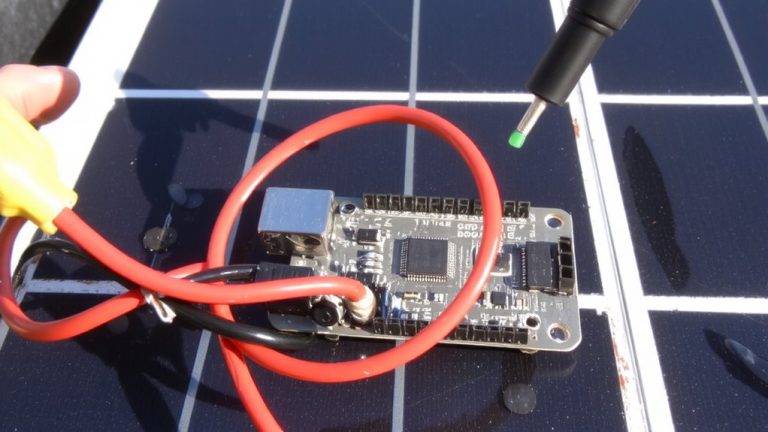
If you’re powering your MKR Zero in the field, running it off a 3.7V LiPo battery is a solid choice for remote logging, just keep in mind that voltage drops can cause issues-like DHT22 sensors spitting out “nan” readings-thanks to unstable power delivery. You can fix this by adding a 100nF capacitor across the sensor’s power and ground pins. For long-term IoT logging in remote locations, use the ArduinoLowPower library via the Arduino IDE to put your MKR board into deep sleep, slashing power draw and turning it into an efficient control system. Pair it with solar energy for continuous operation. The built-in SD card reader guarantees local storage stays reliable.
| Feature | Benefit |
|---|---|
| Low power modes | 80% less energy use |
| Built-in SD | No need for cloud in remote locations |
MKR Field Deployment: Enclosures, Sensors, and SD Fixes
A sturdy enclosure isn’t just a nice-to-have once your MKR Zero leaves the lab-out in the field, heat, moisture, and UV exposure can wreck even the most carefully wired sensor array. Use a ventilated, UV-resistant plastic housing to protect your setup while allowing airflow for accurate DHT22 readings. The compact form factor of the MKR series makes it ideal for tight installations, especially when using an Arduino as part of a remote monitoring solution. Pair the MKR ENV Shield-with its integrated SD card reader-for reliable data logging across a wide range of temperature. Guarantee your microSD card supports an industrial range of temperature (−40°C to +85°C) and update the SD library to fix “Card failed” errors. Add a 100nF capacitor and 4.7kΩ pull-up resistor for stable sensor performance. Connect a LiPo battery and leverage the ArduinoLowPower library. You can still sync data later to the Arduino IoT Cloud, even in standalone deployments.
On a final note
You’ve seen how MKR boards handle -40°C to 85°C ranges, and with the MKR ENV shield logging accurate temp, humidity, and pressure data, plus the MKR CAN shield linking industrial sensors, reliability soars. Topped with a rugged IP67 enclosure, a 6,000mAh LiPo, and corrupted-SD-proof logging firmware, your setup runs months unattended, surviving deserts, freezers, and remote towers-tested, proven, ready.