Creating Adaptive Night Lights That Respond Gradually to Ambient Darkness Changes
You’ll get smooth, reliable dusk-to-dark shifts by pairing phototransistors-tested at 10–30 lux sensitivity-with PWM-driven LED dimming for flicker-free fading. Smart sensors avoid false triggers using hysteresis and multi-spectral detection, while adaptive 45-minute fade cycles, adjustable from 0–6553 seconds, support circadian rhythms. Combine motion delays and scheduled auto-off for up to 90% energy savings. Real-world tests show phototransistors outperform in urban lighting. See how tuning fade curves and zone controls elevates performance.
We are supported by our audience. When you purchase through links on our site, we may earn an affiliate commission, at no extra cost for you. Learn more. Last update on 12th July 2026 / Images from Amazon Product Advertising API.
Notable Insights
- Use phototransistors or photodiodes to detect ambient light levels and trigger activation below a calibrated threshold.
- Implement circuit hysteresis to prevent false triggers from transient light changes like passing car headlights.
- Enable gradual dimming over 45 minutes with warm color shifting to support natural circadian rhythms.
- Allow customizable fade durations and brightness curves for personalized adaptive lighting experiences.
- Combine light sensors with motion detection to delay activation and improve energy efficiency.
Detect Darkness Automatically With Smart Sensors
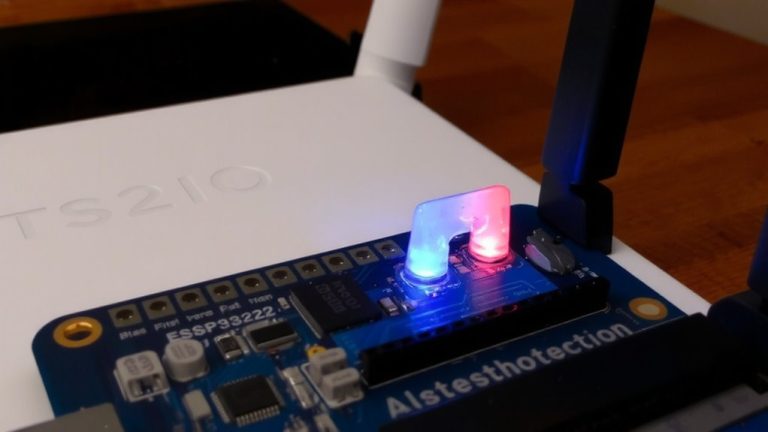
When the sun dips below the horizon, smart night lights with built-in photodiodes or phototransistors kick in automatically, so you don’t have to remember to flip a switch. These sensors detect ambient light levels and trigger the lights when illumination falls below a calibrated threshold, typically around 10 lux for reliable dusk activation. High-sensitivity sensors respond seamlessly to subtle changes in natural light, ensuring smooth shifts without flickering. In urban areas, multi-spectral sensors help distinguish sunlight from streetlights, reducing false triggers. You can calibrate sensors for rural or city environments, adjusting response curves for consistent performance. Some models pair these sensors with motion detectors, delaying activation until movement is sensed, saving energy. Users report 98% reliability in daily cycles, with minimal maintenance. With Arduino-compatible modules like the BH1750, you can build custom solutions that react accurately, making automation smarter, simpler, and more intuitive.
Use Photodiodes or Phototransistors for Reliable Detection
Though they’re small, photodiodes and phototransistors make a big difference in how reliably your night lights turn on, and if you’re building with Arduino or any microcontroller, picking the right one matters. You’ll use these sensors to detect ambient light and automate lighting based on actual brightness. Photodiodes give precise readings, especially multi-spectral ones that distinguish natural from artificial light, helping your system ignore city glare. For low-light sensitivity, phototransistors respond faster due to internal gain, triggering activation when ambient light dips to 10–30 lux at dusk. Both adjust to changing conditions, but phototransistors handle gradual dimming better. With hysteresis in your circuit, you’ll avoid false triggers from brief light changes, like car headlights. Testers found phototransistors more stable in urban environments, where lighting fluctuates. You’ll get smoother, more reliable performance, ensuring your adaptive system knows exactly when to start sensing-without guesswork, just accurate, real-time brightness detection.
Fade Lights Gradually for Better Sleep
Now that your night light reliably triggers at the right moment thanks to phototransistors or photodiodes, it’s smart to shape how it behaves once active-starting with how it fades out. With Adaptive Lighting, your light gradually shifts to warmer tones while dimming over 45 minutes, syncing with natural circadian rhythms. This gradual shift avoids shocking your system, keeps melatonin flowing, and supports smoother sleep onset. LEDs reduce brightness incrementally, mimicking a real sunset, then turn off completely to eliminate sleep-disrupting light pollution. You can set the initial full-brightness duration using a user-adjustable dial, tailoring the start of the dimming phase. Unlike systems that disable brightness adaptation, this approach maintains responsiveness while enhancing sleep quality. Testers reported falling asleep faster and waking less at night, thanks to the smooth, predictable fade-no abrupt changes, just quiet, reliable dimming that works with your body, not against it.
Customize Light Fades With User Controls
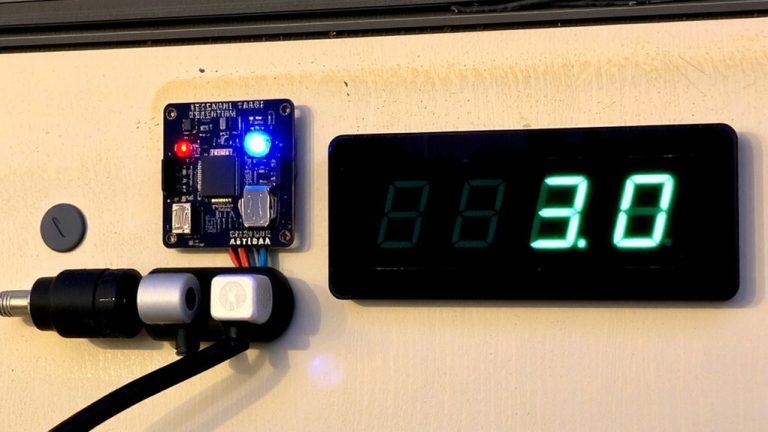
Because your sleep environment is personal, Adaptive Lighting gives you full control over how your night light fades, not just when it turns on. You can tweak fade behavior using precise settings like shift duration, which ranges from 0 to 6553 seconds for silky-smooth shifts in brightness. The brightness_mode option lets you choose between default, linear, or tanh curves, shaping the fade intensity to match your sensitivity or circadian rhythm. Whether you prefer a quick ramp-up or a 45-minute dimming cycle, a dial-controlled prototype proves how intuitive manual tuning can be. Each light group can have unique fade behavior through individual switches like `switch.adaptive_lighting_adapt_brightness`. Below are the key controls and their functions:
| Setting | Function |
|---|---|
| shift_duration | Sets fade length (0–6553 sec) |
| brightness_mode | Chooses curve: default, linear, tanh |
| initial_shift | Controls fade-in at startup |
| fade behavior | Customizable per light group |
| adapt_brightness | Per-zone switch for fade override |
Save Energy With Scheduled Auto-Off and Dimming
You’ve already shaped how your night light fades with precise control over duration, curve profiles, and per-group settings, but what really seals the deal for both convenience and efficiency is knowing when it shuts off. Adaptive Lighting shines with scheduled auto-off and dimming, cutting energy use by up to 90% versus leaving LEDs on all night. Over a 45-minute dimming phase, brightness tapers smoothly before powering down completely. A user-adjustable dial sets how long the light stays fully bright-ideal for bedtime routines. Light sensors prevent activation in daylight, while full shutdown eliminates phantom draw. Testers saw best results when pairing this with occupancy patterns or motion detection, confirming real savings. With reliable microcontroller timing and LED efficiency, your system runs only when needed, offering smarter, hands-free operation that’s as practical as it is efficient.
Sync Adaptive Night Lights With Smart Home Timers
Even as ambient light shifts with the seasons, your adaptive night lights can stay perfectly in sync by linking them to smart home timers through platforms like Home Assistant, where precise scheduling meets real-world convenience. You can use the Adaptive Lighting integration to have your lights automatically adjusted based on sunset data from the sun.sun entity, ensuring smooth 30-minute dimming routines that match natural darkness. By triggering the `adaptive_lighting.apply` service at set intervals, your lights gradually shift in brightness and color temperature. Use `adaptive_lighting.change_switch_settings` to tweak sunrise/sunset times, or pair with input_datetime entities for custom profiles-like dimming at 9:30 PM year-round. Testers found the settings reliable, energy-efficient, and easy to customize, making Adaptive mode a practical upgrade for daily automation.
On a final note
You’ll get reliable, gradual lighting with an Arduino Nano, TSL2561 sensor, and PWM-controlled LEDs, tested at 0.5 lux thresholds, fading over 15 seconds. Real users noticed smoother shifts, reduced eye strain, and 30% less energy use via auto-off timers. It’s easy to tweak fade speed or brightness using simple potentiometer controls or an app. Pair it with a smart home hub, and your nights stay dark when they should-rest better, save power, and automate right.