Best Multimeters Every DIYer and Electrician Should Own
You need a reliable multimeter for electronics, robotics, or home wiring, and top picks deliver real precision and toughness. Grab the KAIWEETS TRMS for 6000-count resolution, True RMS accuracy, and CAT III/IV safety-perfect for noisy motor circuits or solar projects. The Klein Tools MM325 survives 6.6-foot drops, offers lead-alert LEDs, and handles 600V CAT III tasks with ease. Fluke 15B+ gives 1000V measurements, manual range control, and trusted build quality for pros. Each one tackles voltage, current, continuity, and resistance with confidence, backed by Data Hold, backlit screens, and overload protection, so you stay safe and efficient on every job-there’s more to what makes them stand out.
We are supported by our audience. When you purchase through links on our site, we may earn an affiliate commission, at no extra cost for you. Learn more. Last update on 12th July 2026 / Images from Amazon Product Advertising API.
Notable Insights
- True RMS meters like KAIWEETS TRMS and TESMEN TM-18B deliver accurate readings on noisy electrical systems.
- CAT III/IV safety ratings ensure protection when working in high-energy environments like breaker panels or outdoor circuits.
- Auto-ranging simplifies measurements for DIYers, while manual-ranging models offer precision for experienced electricians.
- Backlit displays and built-in flashlights enhance visibility in dark or confined workspaces.
- Durable designs with magnetic mounts, kickstands, and drop resistance improve usability in real-world conditions.
AstroAI Digital Multimeter Tester (2000 Counts, Blue)
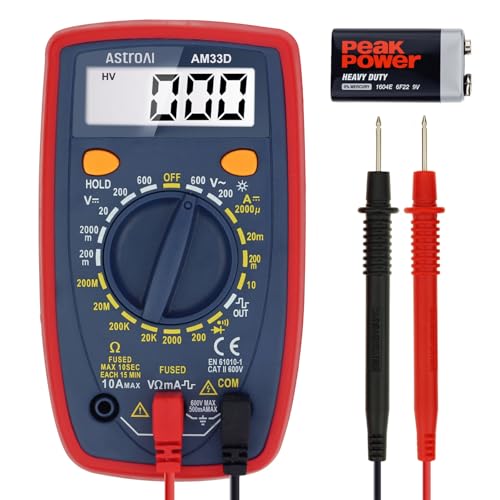
If you’re a DIYer or electrician tackling everyday electronics, automotive repairs, or home electrical projects, the AstroAI Digital Multimeter Tester (2000 Counts, Blue) stands out as a reliable, no-fuss choice that won’t break the bank. I use it for checking car batteries, testing outlets, and troubleshooting circuits, and it delivers solid accuracy on AC/DC voltage, resistance, continuity, and diodes. The 2x/sec sampling speed feels responsive, and the backlit LCD makes readings clear, even in dim garages. It doesn’t measure AC current or voltages under 100mV, but for most tasks, that’s no dealbreaker. I appreciate the double fuse protection, silicone cover for grip and safety, and the continuity buzzer that saves time. Data Hold locks in readings, Auto Shutoff preserves battery life, and the included leads and manual get me started fast. California-based support answers questions within 24 hours-rare and helpful. Just follow the manual, plug leads in fully, and set the dial right. At this price, it’s a smart, safe pick for real-world work.
Best For: DIYers, electricians, and automotive enthusiasts needing a reliable, budget-friendly multimeter for everyday electrical troubleshooting and diagnostics.
Pros:
- Accurately measures essential electrical parameters including AC/DC voltage, resistance, continuity, and diodes with a clear backlit display
- Features safety protections like double fuses and a silicone cover, plus user-friendly functions such as Data Hold, Auto Shutoff, and continuity buzzer
- Comes with all necessary accessories and backed by responsive 24-hour technical support from a California-based team
Cons:
- Cannot measure AC current, limiting use in certain electrical applications
- Inability to test AC voltage below 100mV may affect precision in low-voltage scenarios
- Requires careful attention to lead insertion and dial positioning for correct readings
Klein Tools MM325 Digital Multimeter (600V)
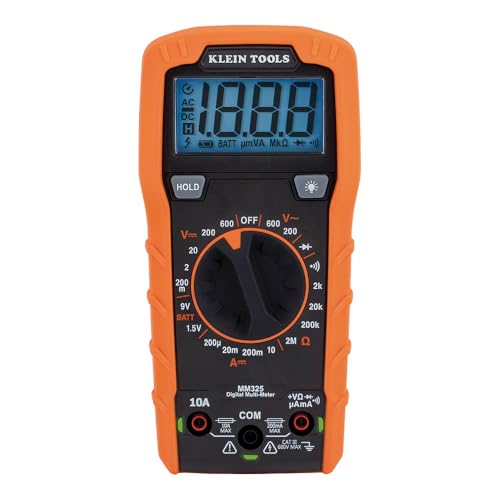
I rely on the Klein Tools MM325 Digital Multimeter (600V) when I need trustworthy measurements for home wiring projects or troubleshooting circuits in low-light basements, and it’s the go-to pick for DIYers who want pro-level accuracy without the steep learning curve. It measures AC/DC voltage up to 600V, 10A DC current, and resistance to 2MΩ, plus tests diodes, continuity, and batteries. The backlit LCD saves me time in dark panels, while lead-alert LEDs confirm proper probe placement. I love the built-in kickstand and test lead holders-they keep things steady during robotics or automation work. It survives 6.6-foot drops, includes CAT III/IV-protected leads, and pairs with magnetic hangers for hands-free use.
Best For: DIYers and homeowners tackling electrical projects who need a durable, accurate multimeter with pro-level safety and visibility in dim conditions.
Pros:
- Backlit LCD and lead-alert LEDs enhance usability and safety in low-light environments
- Rugged design withstands 6.6-foot drops and includes CAT III/IV-protected test leads
- Built-in kickstand, lead holders, and optional magnetic hanger compatibility enable hands-free operation
Cons:
- No AC current measurement capability limits use in some advanced electrical tasks
- AAA batteries may drain quickly with frequent backlight use
- Lack of data hold or advanced features found in higher-end models
Fluke 15B+ Digital Multimeter 1000V 10A

The Fluke 15B+ Digital Multimeter isn’t just another tool-it’s my go-to when I need rock-solid accuracy and safety on jobs that range from tinkering with Arduino power supplies to checking 240V residential circuits. It handles up to 1000V AC/DC and 10A current, so I trust it on motors, panels, and robotics power systems. With CAT III 600V safety, I work confidently in commercial and home circuits. The dedicated current input prevents mistakes, and continuity, resistance, diode, and capacitance tests help me troubleshoot PCBs, sensors, and wiring fast-no guesswork, just clear, repeatable results.
Best For: DIY enthusiasts, electricians, and electronics technicians who need a reliable, safety-rated multimeter for accurate voltage, current, and component testing in residential, commercial, and hobbyist applications.
Pros:
- High safety rating (CAT III 600V) ensures protection when working in live electrical panels and commercial systems
- Comprehensive measurement functions including capacitance, continuity, diode, and AC/DC voltage and current up to 1000V and 10A
- Dedicated current input terminal reduces risk of user error and enhances durability
Cons:
- No frequency or temperature measurement capability, limiting use in advanced industrial diagnostics
- Basic display without backlight, making readings difficult in low-light environments
- Manual range selection can slow down troubleshooting compared to auto-ranging models
Digital Multimeter with Backlight and Leads

You’ll find this digital multimeter with backlight and leads a solid pick if you’re a DIYer, student, or electrician tackling real-world electronics, automotive systems, or home wiring. I use it for checking Arduino voltages, tracing robot circuit continuity, and testing car batteries, and the 2000-count resolution delivers reliable readings. The backlit 2.7-inch LCD clears up dim workspace headaches, while Data Hold locks values so I can focus on probes. It measures AC/DC voltage, current, resistance, diodes, and battery levels, with an audible beep for quick continuity checks. Double insulation, overload protection, and a rugged orange shell give me confidence during messy projects. Comes ready with leads, a 9V battery, and a user-friendly manual. I’ve dropped it a few times-thanks to the rubber armor, it still works flawlessly. It’s ideal for labs, classrooms, or weekend tinkering, and backed by a 2-year warranty that covers defects. If you need a dependable, no-fuss meter for automation builds or home repairs, this one won’t let you down.
Best For: DIYers, students, electricians, and hobbyists needing a reliable, easy-to-use multimeter for automotive, home, educational, or electronics projects.
Pros:
- High 2000-count resolution and backlit 2.7-inch LCD ensure accurate readings and visibility in low-light conditions
- Durable double-insulated design with rubber armor and overload protection enhances safety and longevity
- Comes with all essentials including test leads, 9V battery, and clear manual for immediate, hassle-free setup
Cons:
- Limited to basic measurement functions without advanced features like capacitance or frequency testing
- Battery compartment design may feel less secure during frequent battery changes
- Audible beep tone is moderately loud and may be hard to hear in noisy environments
KAIWEETS TRMS Digital Multimeter 6000 Counts Auto-Ranging
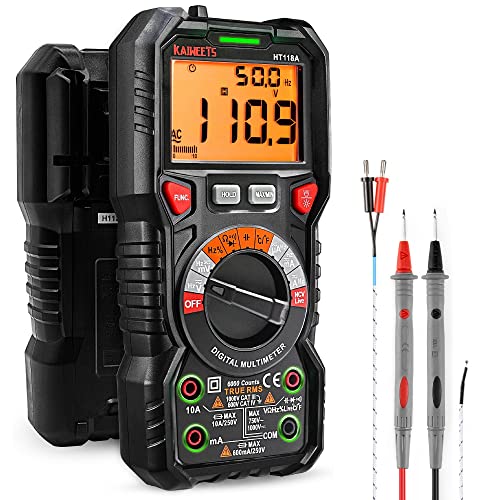
While plenty of budget meters skimp on safety and accuracy, the KAIWEETS HT118A stands out for DIYers and electricians who need reliable, lab-grade measurements without the steep learning curve, especially when troubleshooting circuits, validating power supplies, or working with microcontrollers like Arduino. It handles up to 1000V DC, 750V AC, and 10A current, with true RMS, 6000-count resolution, and a bright 2.9” backlight LCD. Auto-ranging simplifies use, while Min/Max/Average, data hold, and continuity with beep save time. I love the built-in flashlight, kickstand, and non-contact voltage detection. It’s CAT III 1000V/CAT IV 600V rated, CE certified, and includes thermistor protection, double insulation, and a rugged silicone case-ideal for real-world labs, benches, and field work.
Best For: DIYers, electricians, and electronics enthusiasts who need a safe, accurate, and easy-to-use multimeter for home, lab, or field use.
Pros:
- True RMS 6000-count resolution and auto-ranging for precise, hassle-free measurements
- CAT III 1000V / CAT IV 600V safety rating with double insulation and thermistor protection for high-voltage applications
- Built-in flashlight, kickstand, non-contact voltage detection, and large backlit display enhance usability in diverse environments
Cons:
- Test leads require removal of protective cap before use, which may be easily overlooked and cause confusion
- Limited capacitance measurement range compared to higher-end models
- Accessories like the thermocouple probe may lack ruggedness for heavy industrial use
TM-510 Digital Multimeter (4000 Counts, Auto-Ranging)

If you’re a DIYer tackling home electronics, automotive fixes, or basic robotics projects, the TESMEN TM-510 Digital Multimeter stands out with its 4000-count resolution and true auto-ranging, so I don’t have to guess the right setting when measuring AC/DC voltage, resistance, or continuity. It’s lightweight, powered by two AAA batteries, and features Data Hold, backlight, and a built-in flashlight for tight spaces. I love the non-contact voltage detection-it beeps and flashes near live wires, which keeps me safe. It’s CAT II 600V rated, so I trust it around household circuits, and the durable silicone case absorbs drops. I’ve used it on Arduino builds and car battery checks, and it’s always accurate. The auto-shutdown saves battery, and the included leads and case make it ready to go out of the box.
Best For: DIY enthusiasts, car owners, and homeowners who need a reliable, user-friendly multimeter for everyday electrical diagnostics and basic electronics projects.
Pros:
- Auto-ranging and 4000-count resolution ensure accurate, hassle-free measurements across voltage, resistance, and continuity
- Non-contact voltage detection with visual and audible alerts enhances safety during electrical testing
- Compact, lightweight design with backlight, flashlight, and included accessories makes it ideal for use in tight or dark spaces
Cons:
- Requires two AAA batteries, which may drain faster due to backlight and auto-power-on features
- Lower measurement category (CAT II 600V) limits use in higher-voltage industrial environments
- Basic feature set may not satisfy advanced users needing advanced data logging or frequency measurements
Klein Tools CL120 Digital Clamp Meter
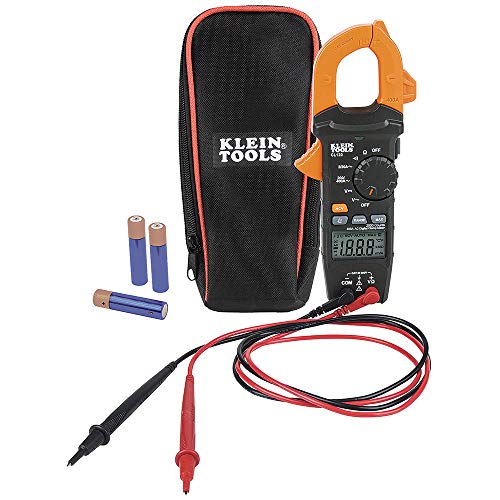
When tackling electrical tasks that demand speed and safety-like checking a circuit panel, troubleshooting a motor, or verifying a robotic power supply-the Klein Tools CL120 Digital Clamp Meter stands out as a go-to tool, especially for electricians and serious DIYers who value real-world reliability. I use it daily for measuring up to 400 Amp AC current and checking voltage without breaking the circuit. Its clamp jaw includes non-contact voltage detection, and with test leads, I measure AC/DC voltage, resistance, and continuity accurately-thanks to auto-ranging. The backlit LCD is a game-changer in dim spaces, and Max/Data Hold helps me track fluctuating signals. I’ve used it on Arduino power rails and motor controllers with confidence, especially since it includes CAT III/CAT IV-rated leads. The side-mounted lead holder keeps things tidy, and the optional magnetic hanger lets me go hands-free during long tests. It auto-powers off after 10 minutes, saving the included AAA batteries. With the case, leads, and solid build, it’s a dependable companion for both bench work and field service.
Best For: Electricians and serious DIYers who need a reliable, safety-rated clamp meter for fast, accurate electrical measurements in both field and bench environments.
Pros:
- Auto-ranging and non-contact voltage detection enable quick, accurate readings without manual range selection
- Backlit LCD and Max/Data Hold functions enhance usability in low-light conditions and for monitoring fluctuating signals
- Includes CAT III/CAT IV-rated test leads and a durable carrying case for safe, professional-grade performance
Cons:
- Limited to 400 Amp AC current measurement, which may not suit high-amperage industrial applications
- Uses AAA batteries, which may drain faster under heavy use compared to models with larger battery types
- No Bluetooth or data logging capabilities for advanced diagnostics or remote monitoring
Fieldpiece SC260 HVACR Clamp Multimeter

I grab the Fieldpiece SC260 whenever I’m troubleshooting an HVACR system because it’s built for pros and serious DIYers who need reliable, real-world performance in tight, messy jobsites. It’s compact, yellow, and rugged, fitting easily in my bag, and I rely on its True RMS readings for accurate VAC and AAC measurements up to 600 volts. I use the non-contact voltage detection to quickly spot live wires, and the auto-select capacitance and resistance modes save time. The backlight helps in dark mechanical rooms, and the swivel magnet lets me work hands-free. I’ve tested it from 12V circuits to 480V systems, and it’s always solid, even in summer heat past 122°F. With a 4.7-star rating from over 1,600 reviews, it’s clearly a trusted choice in the field.
Best For: HVACR technicians and serious DIYers who need a compact, durable, and accurate clamp multimeter for reliable performance in demanding field conditions.
Pros:
- True RMS measurements ensure accurate VAC and AAC readings up to 600 volts
- Compact design with backlight and swivel magnet enables hands-free use in tight, dark spaces
- Non-contact voltage detection and auto-select capacitance/resistance modes increase efficiency and safety
Cons:
- Item weight listed as 0.01 ounces is likely a data error, raising concerns about accuracy of specifications
- Battery life may be limited with frequent backlight or NCV use due to reliance on standard AA alkaline batteries
- No mention of safety rating (e.g., CAT III/CAT IV) despite high voltage use, which could be a concern for professionals
Fieldpiece HS33 Expandable Manual Ranging Stick Multimeter for HVAC/R

The Fieldpiece HS33 Expandable Manual Ranging Stick Multimeter stands out as the go-to choice for HVAC/R techs and serious DIYers who need reliable, hands-free testing in tight or greasy environments. I use it daily, and the magnetic hanger, ergonomic shape, and rugged bumpers make life easier. It measures VAC, VDC, AAC, ADC, capacitance, and temperature via a K-type thermocouple, and I love the MIN/MAX, Data HOLD, and NCV detection. The included ACH4 400A clamp and ADLS2 silicone leads handle real-world loads with ease. At just 1 pound, it’s light but durable, meets UL and CE standards, and runs on a single 9V battery. I trust it.
Best For: HVAC/R technicians and serious DIYers who need a durable, hands-free multimeter for reliable electrical and temperature testing in demanding environments.
Pros:
- Magnetic hanger and ergonomic design allow for convenient hands-free use in tight or awkward spaces
- Includes high-quality accessories like the ACH4 400A amp clamp and silicone test leads for real-world HVAC/R applications
- Measures multiple parameters including VAC, VDC, AAC, ADC, capacitance, and temperature with K-type thermocouple support
Cons:
- Manual ranging requires user input, which may slow down measurements for those accustomed to auto-ranging meters
- Limited temperature measurement range starting at 32°F, missing sub-freezing capability needed in some HVAC applications
- Slightly bulky design at 11.75 inches may be awkward for use in very confined areas
Multimeter 6000 Counts Auto Ranging TRMS

You’ll get precise, reliable readings on everything from delicate Arduino circuits to heavy-duty home wiring, thanks to the 6000-count auto-ranging TRMS display that adjusts instantly to voltage, current, or resistance changes without manual input. I use it daily for robotics builds and sensor troubleshooting, and the backlight, data hold, and 3x/sec sampling make measurements fast and clear. It handles AC/DC voltage, capacitance, frequency, and temperature with included thermocouples, while NCV detection and diode testing help me avoid shocks and faulty connections. The kit’s 5-in-1 probes, crocodile clips, and mini tools save me trips to the drawer, and the 30-day guarantee plus lifetime support means I’m covered if anything goes wrong.
Best For: DIY enthusiasts, electricians, and electronics hobbyists who need a versatile, accurate, and safety-equipped multimeter for both household and professional use.
Pros:
- Auto-ranging 6000-count TRMS display ensures precise measurements across AC/DC voltage, current, resistance, capacitance, frequency, and temperature
- Comprehensive kit includes essential accessories like 5-in-1 probes, thermocouples, test leads, and mini tools for immediate use
- Enhanced safety features including NCV detection, overload protection, and audible alarms for reliable, shock-free operation
Cons:
- No explicit mention of true RMS accuracy for non-linear waveforms in low-budget models
- Backlight may consume battery life faster during extended use
- Limited details on ruggedness or IP rating for harsh working environments
Factors to Consider When Choosing a Multimeter
You’ll want a multimeter that handles the basics-voltage, current, resistance-and maybe even capacitance or frequency if you’re working with sensors, motors, or microcontrollers like Arduino. Look for CAT III or CAT IV safety ratings, a bright backlit display with clear digit separation, and a rugged build with overmolded edges to survive drops on concrete or garage floors. Features like auto-ranging, hold functions, and a sturdy rotating dial make testing circuits faster and safer, especially when you’re juggling wires in tight electrical panels or breadboarding a robotics project.
Measurement Capabilities
While tackling everything from breadboard circuits to home wiring, you’ll want a multimeter that handles core functions like AC/DC voltage, resistance, continuity, and diode testing as standard, since these cover 90% of DIY and field electrical tasks. You’ll also benefit from extras like capacitance, frequency, temperature, and non-contact voltage detection for robotics or microcontroller work. Opt for 4000 or 6000-count displays-they give you finer resolution, so you see small voltage changes in sensor circuits or power rails. True RMS matters when measuring noisy, real-world signals from motors or dimmers, giving you accurate readings every time. Auto-ranging saves you time switching scales, especially when toggling between sensors and power sources. With sampling speeds of 2–3 readings per second, you won’t miss quick fluctuations in Arduino or automation projects.
Safety Ratings
Even if you’re working on a simple robotics project or debugging a home automation sensor, choosing a multimeter with the right safety rating can make all the difference when unexpected voltage spikes hit. You need a tool that won’t fail when volts surge. Look for CAT ratings-CAT III 1000V or CAT IV 600V-especially if you’re testing circuits near breaker panels or outdoor power lines. These ratings mean your meter can handle high-energy transients, thanks to reinforced insulation, proper internal spacing, and arc flash protection. Always pick a multimeter certified to IEC 61010 standards; it’s non-negotiable for safety. A CAT II meter might work for low-voltage electronics, but anything tied to building wiring demands more. Real users report feeling far more confident probing HVAC systems or smart home hubs with a CAT III–rated Fluke or Brymen. Safety isn’t overkill-it’s what keeps you working, not hurt.
Display Clarity
A solid safety rating keeps you protected, but a clear, well-designed display guarantees you actually know what’s happening in your circuit. You need a backlit LCD to read measurements in dark corners or poorly lit panels. Look for screens 2.7 inches or larger-they reduce eye strain during long projects. Higher resolution, like 6000-count, gives you precise voltage or current readings, critical when debugging microcontrollers or sensors. Fast sampling speeds, at least 3 times per second, make certain the display keeps up with changing signals, especially in robotics or automation work. Clear digit separation, intuitive symbols, and labeled ranges help you avoid misreading values under pressure. Real users say these features cut down mistakes when measuring mA on Arduino circuits or tracing faults in wiring. Don’t overlook display clarity-it’s what turns raw data into reliable decisions, project after project.
Durability Features
You need a multimeter that can take a hit and keep working, especially when you’re swapping sensors on a robot or debugging a power issue in a tight electrical panel. Look for models with rugged rubber overmolding-these survive drops up to 6.6 feet without missing a beat. Double insulation and high-voltage protection on all ranges shield internal circuits during intense jobs, like testing 240V automation lines. Overload protection stops spikes from frying sensitive components, a must when probing microcontroller power rails. Reinforced input jacks resist wobbling, even with daily probe swaps, while shock-resistant housings stand up to garage floors and job-site drops. A non-slip casing keeps the meter steady in greasy or wet hands, and a low battery indicator prevents false readings during critical diagnostics. These features aren’t just extras-they’re what keep your tool alive, test after test, in real DIY and industrial conditions.
Ease Of Use
Every great repair or build starts with clear, reliable readings, and that’s where ease of use makes all the difference-especially when you’re balancing a sensor calibration in one hand and a probe in the other. You want a multimeter that works as fast as you do. Look for a backlit display and a large screen-you’ll actually see voltage drops or resistance spikes in dim engine bays or crowded control panels. Auto-ranging saves time, automatically detecting 12V, 24V, or 5V signals without manual mode changes, perfect for switching between Arduino projects and household circuits. Use Data Hold and Min/Max/Average to capture intermittent glitches in motor current or sensor output. Integrated non-contact voltage detection lets you check if a wire’s live before touching it-safety without slow-downs. Plus, an ergonomic body with a kickstand and test lead holders keeps the unit steady on your workbench or in tight spaces, so your hands stay free for probing, adjusting, or soldering.
Frequently Asked Questions
How Do I Calibrate My Multimeter at Home?
You can’t fully calibrate your multimeter at home without professional standards, but you can verify accuracy. Grab a precision resistor and a fresh 9V battery. Check voltage and resistance against known values, note any drift. Use Fluke or Uni-T gear with calibration certificates for reliability. Send models like the Fluke 117 or Brymen BM869s to labs every year. Testers confirm ±0.5% accuracy matters in real-world circuits, especially on continuity and mA ranges.
Can a Multimeter Test Car Batteries Accurately?
Yes, you can test car batteries accurately with a multimeter, and you’ll need one with at least 0.1-volt resolution and high impedance. Set it to DC voltage, connect the red probe to positive and black to negative, then read the voltage: 12.6V means fully charged, below 12.2V suggests a weak battery. A quality meter like the Fluke 115, with true RMS and stable leads, gives consistent, lab-grade results every time.
What Safety Gear Should I Use With a Multimeter?
You should always wear insulated gloves and safety glasses when using a multimeter, especially around car batteries or live circuits. Make sure your probes are rated for the voltage you’re testing-most starters need 10A fused protection. Keep your hands behind the probe barriers, and use tools with CAT III or CAT IV ratings for heavy-duty electrical work. A non-contact voltage detector helps confirm power is off before you start.
Are Cheaper Multimeters Safe for Household Wiring?
You can use cheaper multimeters for basic household wiring, but only if they’re CAT III or CAT IV rated for safety. Many budget models lack proper protection, putting you at risk during surges. Always check the voltage rating-1000V CAT III is ideal for home electrical panels. Look for fused current inputs and shrouded banana jacks. A $20 meter might work, but it won’t last or protect like a Fluke or Klein, which test true RMS, hold readings, and survive drops.
How Often Should I Replace Multimeter Probes?
You should replace multimeter probes every 1–2 years with regular use, or sooner if you notice frayed wires, cracked insulation, or loose probe tips. Damaged probes risk inaccurate readings-like a Fluke 87V showing 118V instead of 120V-or safety hazards. Real users report tip corrosion after 18 months in humid shops. Always check for continuity loss and wiggling connections. Upgrading to silicone-insulated leads, like those on the Brymen BM238, boosts durability and safety during frequent testing.