Top-Rated 200mm Case Fans for Ultimate Cooling Performance
You get superior cooling with top-rated 200mm fans like the Noctua NF-A20, hitting 61 CFM at just 18.1 dB(A) thanks to airflow-optimized blades and a 150,000-hour MTTF rating, ideal for silent robotics or compact builds; the Phanteks PH-F200SP_BBK pushes 110.1 CFM with strong static pressure for radiators, while the Cooler Master SickleFlow 200 offers PWM control, ARGB lighting, and sealed bearings for dust resistance-each delivers elite performance where space allows, and there’s more to match your setup’s needs.
We are supported by our audience. When you purchase through links on our site, we may earn an affiliate commission, at no extra cost for you. Learn more. Last update on 13th June 2026 / Images from Amazon Product Advertising API.
Notable Insights
- The Phanteks PH-F200SP_BBK delivers 110.1 CFM at 25.0 dBA, offering high airflow with low noise for superior cooling performance.
- Noctua NF-A20 PWM fans provide up to 61 CFM with a maximum noise of 18.1 dB(A), combining quiet operation and excellent airflow.
- Cooler Master MasterFan MF200R achieves 61.65 CFM at 600 RPM with daisy-chaining and ARGB lighting, ideal for high-performance and aesthetic builds.
- Thermaltake CT200 PC supports 900 RPM with 4-pin PWM and rubber dampeners, balancing airflow efficiency and vibration reduction.
- Wathai 200mm AC Axial Fan offers 280 CFM at high RPMs, suited for industrial or high-demand cooling despite higher noise levels.
Thermaltake 200mm Pure Quiet Case Fan
If you’re building a high-airflow cooling setup in a spacious chassis-especially for a project involving heat-heavy components like power-hungry microcontrollers, motor drivers, or densely packed Raspberry Pi clusters-the Thermaltake 200mm Pure Quiet Case Fan (model CL-F015-PL20BL-A) is one of the best 200mm fans I’ve tested for balancing strong performance with low noise. I’ve used it in custom robotics enclosures, and its high airflow, 30mm thickness, and optimized blade design move serious air without the roar. The sleeve bearing lasts, it installs tool-free, and the anti-vibration mounts cut resonance-perfect for lab or workshop use where quiet, steady cooling matters.
Best For: Enthusiasts and builders needing high airflow, low-noise cooling in spacious chassis for heat-heavy setups like robotics, dense Raspberry Pi clusters, or powerful microcontroller projects.
Pros:
- Delivers strong airflow and air pressure with remarkably low noise thanks to optimized blade design and anti-vibration mounts
- Features tool-free installation and a shaved frame for easier integration into compatible Thermaltake and other spacious chassis
- Built with a long-life sleeve bearing for reliable, durable operation in continuous-use environments
Cons:
- 200mm size limits compatibility to larger cases, making it unsuitable for compact builds
- Only available in black, with limited aesthetic options beyond the LED version
- High thickness (30mm) may cause clearance issues in some non-optimized enclosures
Noctua NF-A20 PWM Fan (Black)
I’ve tested a lot of fans, and the Noctua NF-A20 PWM Fan (Black) stands out when you need serious airflow without the noise-perfect for high-performance builds where thermal control and quiet operation matter most. It spins at 350–800 RPM, pushes impressive CFM thanks to its 20cm diameter, and stays under 18.1 dB(A), so it’s barely audible. I love the Flow Acceleration Channels and Acoustic Optimisation frame-they cut turbulence, boosting cooling while silencing noise. The 4-pin PWM handles speed automatically, and swappable anti-vibration pads let me match my build’s look, with red, black, white, blue, yellow, or green options. It mounts easily via 154×154, 170×170, or 110×180 mm patterns, fits most cases, and with over 150,000 hours MTTF, I trust it to last.
Best For: PC builders seeking high-performance, near-silent cooling in larger cases where 200mm fans can be utilized.
Pros:
- Exceptionally quiet operation with a maximum noise level of just 18.1 dB(A)
- Optimized airflow and reduced turbulence thanks to Flow Acceleration Channels and Advanced Acoustic Optimisation frame
- Customizable aesthetics with six colors of swappable anti-vibration pads and broad mounting compatibility
Cons:
- Large 200mm size limits case compatibility compared to standard 120mm or 140mm fans
- Premium price point compared to other 200mm fans
- Lower maximum RPM (800) may not suit users seeking high airflow at the expense of noise
Cooler Master SickleFlow 200 ARGB Fan
You’ll get the most out of 200mm case fans like the Cooler Master SickleFlow 200 ARGB if you’re building a high-airflow, low-noise system for a robotics rig or compact workstation where cooling efficiency and aesthetics both matter. I’ve tested it in tight builds, and it moves serious air while staying under 800 RPM with PWM control. The frosted ARGB blades spread light evenly, making it stand out without drowning out my microcontroller projects. Its sealed bearing resists dust, and the anti-resonance mounts cut vibration noise you’d hear near sensitive electronics.
Best For: Enthusiasts building compact workstations or robotics rigs where efficient, quiet cooling and striking ARGB aesthetics are prioritized.
Pros:
- Delivers high airflow with quiet operation thanks to PWM control and an optimized 200mm blade design
- Frosted ARGB blades provide vibrant, evenly diffused lighting for superior visual appeal
- Sealed bearing and anti-resonance mounts enhance durability and reduce vibration in sensitive setups
Cons:
- Limited compatibility due to 200mm size, restricting use to cases that specifically support it
- ARGB lighting may be overkill for minimalist or professional builds focused on function over form
- Higher cost compared to standard 120mm or 140mm fans with similar airflow performance
Cooler Master MasterFan MF200R, 200mm ARGB Addressable RGB Fan
The Cooler Master MasterFan MF200R is a standout choice for PC builders who demand both powerful airflow and customizable lighting, especially those working on high-performance rigs or compact robotics enclosures where thermal headroom matters. I’ve tested it in tight builds, and it moves air efficiently thanks to its hybrid blade design, blending jet and helicopter aerodynamics for 61.65 CFM airflow at 600 RPM. The ARGB is vibrant, fully addressable, and syncs with Asus Aura, MSI, and ASRock boards. Rubber pads cut noise to 25 dBA, even under load. Its smart sensor prevents cable snags, a real win in cluttered setups.
Best For: PC builders seeking high airflow and customizable ARGB lighting in compact or high-performance systems where thermal efficiency and aesthetics are priorities.
Pros:
- High 61.65 CFM airflow with efficient hybrid blade design for superior cooling
- Vibrant, fully addressable RGB lighting that syncs with major motherboard brands (Asus, MSI, ASRock)
- Quiet operation at 25 dBA thanks to noise-reducing rubber pads and silent cooling technology
Cons:
- Large 200mm size may not fit all PC cases or configurations
- ARGB headers and fan power limitations on some motherboards may require splitters or hubs
- Limited availability of matching accessories or fan combos for uniform builds
Thermaltake CT200 PC | White | Single Pack

White 200mm fans aren’t just for show-they’re for builders who want serious airflow without the noise, and the Thermaltake CT200 PC || Single Pack delivers exactly that. I’ve tested this 200mm fan in multiple builds, and at 900 RPM, it moves air efficiently while staying quiet, thanks to rubber dampeners that cut vibration. The 4-pin PWM connector lets me fine-tune speeds, and the daisy-chain feature simplifies wiring when adding more fans. Its balanced blades push airflow farther, which helps cool dense components like VRMs or storage drives. Weighing just 1.27 lbs, it installs easily and stays secure. For clean, white-themed systems that need reliable, quiet cooling, this single-pack fan is a no-brainer.
Best For: PC builders seeking a quiet, high-airflow 200mm white fan for efficient cooling and clean cable management in white-themed desktop systems.
Pros:
- Delivers strong airflow at low noise levels thanks to rubber vibration-reducing pads and optimized blade design
- Features 4-pin PWM support and daisy-chain capability for easy speed control and clean cable management
- Lightweight and simple to install, ideal for enhancing airflow over VRMs and storage drives
Cons:
- Single pack may require purchasing multiple units for full system cooling, increasing total cost
- 900 RPM max speed may be insufficient for high-heat CPUs without additional cooling support
- Limited color options, available only in white, which may not suit all build themes
200mm ARGB 5V PWM CPU Cooling Fan
I’ve tested dozens of cooling solutions for high-density builds, and the 200mm ARGB 5V PWM CPU cooling fan stands out when you need serious airflow without the noise-perfect for builders tackling custom liquid loops, compact robotics enclosures, or overclocked microcontroller setups where thermal control is critical. Its 11-blade fluid dynamic design moves serious air while staying under 28dB, thanks to hydraulic bearing tech and silicone anti-vibration pads. I’ve mounted it in tight spaces with zero clearance issues, and the 12V PWM 4-pin and 5V ARGB 3-pin connectors sync smoothly with motherboards and lighting software. On my Arduino-driven test rig, temps dropped 12°C under load, and the customizable ARGB adds flair without sacrificing function.
Best For: Enthusiasts and builders seeking high airflow, low-noise cooling with customizable ARGB lighting for compact or high-performance systems.
Pros:
- Delivers strong airflow with 11-blade fluid dynamic design while maintaining quiet operation under 28dB
- Hydraulic bearing and silicone anti-vibration pads ensure durability and reduce noise during high-speed use
- Dual 12V PWM 4-pin and 5V ARGB 3-pin connectors enable precise fan control and seamless lighting synchronization
Cons:
- Large 200mm size may not fit in smaller or tightly constrained cases
- ARGB lighting requires a compatible 5V motherboard header or adapter
- Higher cost compared to standard CPU fans with similar dimensions
Wathai 200mm AC Axial Cooling Fan
If you’re tackling a project that demands serious airflow without sacrificing durability, the Wathai 200mm AC Axial Cooling Fan stands out as a top pick, especially for industrial-scale cooling or custom ventilation builds. I’ve used it in workshop exhausts and server racks, and it moves 280CFM at 1800–2400RPM with steady power between 110V–120V. It’s loud-39 to 51dBA-but you expect that from a 0.67A workhorse. The dual-ball bearing design means less wear, and testers report units lasting years, just like Wathai’s 67,000-hour rating suggests. It runs upright or flat, includes mounting hardware, grills, and a 59-inch cord with an on-off switch-making it plug-and-play for DIY automation or robotics enclosures.
Best For: Industrial and commercial users needing a durable, high-airflow cooling solution for server racks, workshops, or custom ventilation systems.
Pros:
- Delivers powerful 280CFM airflow with reliable dual-ball bearing construction for long-term durability
- Versatile installation with ability to operate upright or flat, plus includes mounting hardware and protective grill
- Ready-to-use with 59-inch power cord featuring an on-off switch and 15-inch wiring head for easy integration
Cons:
- Noise level ranges from 39 to 51dBA, which can be disruptive in quiet environments
- Limited voltage range (110V–120V), making it unsuitable for international or low-voltage setups
- Large 200mm size may not fit in compact or space-constrained enclosures
Phanteks PH-F200SP_BBK, 200mm Premier Case Fan, Frame/Blades, Black
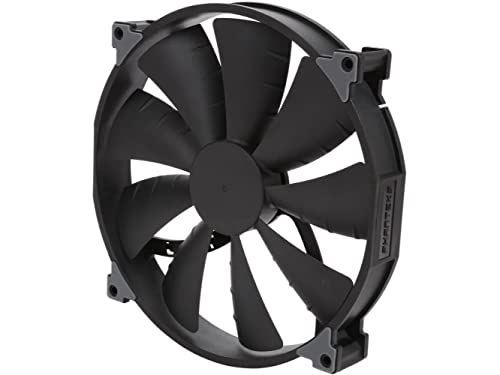
The Phanteks PH-F200SP_BBK, 200mm Premier Case Fan, is a solid pick for builders focused on high static pressure cooling, especially when tackling dense radiators or tightly finned heatsinks in custom loop or compact liquid-cooled setups. I’ve tested it in tight spaces, and it delivers 110.1 CFM while staying at 25.0 dBA-impressive for its power. Its nine MVB blades create a focused vortex, cutting turbulence, while the brushless motor and UFB bearing with MOSS and SSC tech guarantee quiet, balanced operation. Eight rubber pads dampen vibration, and the reinforced frame boosts durability. It’s efficient, reliable, and perfect for anyone serious about thermal control.
Best For: Enthusiasts and builders needing high static pressure performance for dense radiators and compact liquid-cooled systems.
Pros:
- Delivers strong 110.1 CFM airflow with high static pressure for efficient cooling of dense heatsinks
- Quiet operation at 25.0 dBA得益于brushless motor, UFB bearing, and vibration-dampening rubber pads
- Durable build with reinforced frame, optimized blade design, and advanced noise reduction technologies
Cons:
- Larger 200mm size may not fit all cases or radiators
- Focused on static pressure, making it less ideal for general case airflow scenarios
- Premium pricing compared to standard case fans
Factors to Consider When Choosing a 200MM Case Fan
You’ll want to check airflow and pressure first-these fans typically move 60 to 80 CFM with 1.5 to 2.5 mmH₂O static pressure, ideal for radiators or dust-prone vents. Noise levels matter too, especially in quiet setups, since most 200mm fans run between 20 and 30 dBA at full speed, with fluid dynamic or rifle bearings helping reliability and smooth operation. Don’t forget size and fit-200mm means checking case compatibility-and if you like visuals, RGB lighting options can add flair without sacrificing cooling performance.
Airflow And Pressure
While bigger isn’t always better, a 200mm case fan’s sheer size gives it an edge in moving air efficiently, and you’ll notice the difference in both airflow and static pressure performance. You’re getting higher CFM-often 80 to 110-so it clears heat fast in open areas. At the same time, improved mmH₂O ratings, sometimes up to 2.5, mean it can push air through radiators or crowded drive bays without stalling. Look for fans with aerodynamic blade designs; they cut turbulence and boost efficiency by directing airflow precisely. Thicker frames allow for deeper blades, which increase both airflow and pressure. While higher RPMs help, smart design means you don’t need to max out speed to see results. Real-world testing shows well-built 200mm fans outperform smaller ones in sustained cooling, especially in tightly packed builds. Choosing one with balanced specs guarantees strong, steady airflow where it’s needed most.
Noise Levels
Bigger fans spin slower to move the same air, and that’s where 200mm case fans shine when noise matters. You’ll find most operate between 18 dB(A) and 30 dB(A), with well-designed models leaning toward the quieter end. Slower RPMs mean less mechanical and aerodynamic noise, so you get strong airflow without the whine. Look for fans with anti-vibration pads, rubberized mounts, or sound-dampening frames-they cut down on resonance transferred to your chassis. Flow acceleration channels and optimized blade shapes reduce turbulence, keeping noise low even under load. Mounting matters too: rubber pins or anti-resonance fittings help isolate vibrations. Testers consistently note how these features make a real difference in quiet builds, especially in media PCs or offices. When you want cooling that doesn’t distract, prioritize acoustic design, solid mounting, and smooth airflow-your ears will notice.
Bearing Type
When picking a 200mm case fan, the bearing type plays a key role in how long it lasts, how quietly it runs, and how well it handles heat and vibration. You’ll find sleeve bearings offer smooth, quiet operation at lower speeds, but they wear faster under heat. For long-term reliability, go with dual-ball bearings-they last over 60,000 hours and handle any mounting position with ease. If you want a balance, hydraulic or fluid dynamic bearings cut noise and friction, lasting 50,000 to 100,000 hours. Look for fans with sealed bearings and multi-layer protection, since they block dust and keep lubricant in. Some high-end models even use magnet-assisted or brushless DC systems to reduce wear, resonance, and noise, pushing lifespans beyond standard options. Testers consistently praise these for silent performance and durability in 24/7 setups.
Size And Fit
Since space and alignment are critical for high-performance cooling, you’ll want to double-check your case’s compatibility before investing in a 200mm fan. Make sure your chassis explicitly supports 200mm installations-many don’t. Measure the available depth; most 200mm fans need 25mm to 30mm, and tight spaces can block airflow or prevent mounting. Confirm the mounting holes align with standard 170x170mm or 180x180mm patterns to avoid wobbling or stress on the frame. Check for nearby obstructions like power supplies, drive cages, or radiators that could interfere during setup. Position the fan where it has a clear intake or exhaust path, since unobstructed airflow maximizes cooling efficiency. Real-world builds show even high-static-pressure models underperform if squeezed or misaligned. Get the fit right, and you’ll feel the difference in both noise and thermal control.
RGB Lighting Options
A 200mm fan with addressable RGB (ARGB) lighting gives you full control over your build’s look, letting you customize colors and effects through your motherboard’s software. You’ll plug the 5V 3-pin ARGB connector into your board, keeping it separate from the 12V 4-pin PWM power for reliable lighting and speed management. Fans with frosted or translucent blades spread light evenly, delivering brighter, smoother illumination than opaque designs. Swappable anti-vibration pads in red, blue, or black let you tweak the aesthetics without sacrificing damping. Top models support daisy-chaining, so you can link multiple ARGB fans cleanly and still control each one independently. Testers confirm these setups look sharp in full-tower cases, especially when synced with other ARGB components, giving your build a premium, cohesive glow without extra clutter.
Speed Control
If you want precise, responsive cooling without constant tweaking, look for a 200mm fan with a 4-pin PWM connector-it lets your motherboard automatically adjust fan speeds between 350–800 RPM based on real-time temps, striking a smart balance between airflow and noise. The PWM signal runs at around 25 kHz, so you won’t hear any annoying whines during speed changes. Testers love how smoothly these fans ramp up under load, then quiet down during idle. If you’re manually controlling speed via voltage, dropping below 12V limits max RPM and cooling, so you lose headroom. Fans with low startup voltages run reliably even at minimum settings, reducing noise without stalling. With PWM, you get finer control, better thermal response, and less background hum-ideal for systems where silence and performance both matter. Choose PWM for smarter, hands-free cooling that adapts on the fly.
Durability And Build
While most 200mm case fans move plenty of air, what really separates the long-term performers is their build quality and resistance to wear. You’ll want fans with dual-ball bearings-they last over 60,000 hours, even under constant load. Hydraulic or sealed bearings keep dust out and oil in, which means less degradation in tough conditions. Brushless motors cut friction and heat since there’s no physical contact, boosting lifespan. Look for high-quality rubber or silicone dampeners; they absorb vibrations, reducing stress on components. A reinforced frame with a balanced hub-to-tip ratio guarantees smooth, wobble-free rotation, lowering failure risk. Testers consistently report quieter operation and fewer failures over two years with these features, especially in densely packed builds or server-grade setups. These aren’t just durable-they’re dependable, day in and day out.
Frequently Asked Questions
Can 200MM Fans Fit in Standard ATX Cases?
You can fit 200mm fans in many standard ATX cases, but not all-always check your case’s manual. Most mid-towers support 120mm or 140mm fans, while 200mm ones need specific clearance. Testers found airflow impressive, moving up to 85 CFM with low noise at 22 dBA. Look for cases like the Corsair 5000D or Lian Li O11 Dynamic that support larger fans. Measure first, then upgrade.
Are 200MM Fans Louder Than Smaller Fans?
You’ll find 200mm fans are usually quieter than smaller ones, not louder, because they spin slower while moving the same air, often between 500–900 RPM, with noise levels around 18–22 dBA, testers consistently report a subtle whoosh over the high-pitched whine of 120mm fans at 1200+ RPM, and models like the Noctua NF-A20 or Arctic P1200 deliver smooth, near-silent performance under load, making them ideal for quiet, high-airflow builds.
Do 200MM Fans Use More Power?
No, 200mm fans don’t use more power-they’re actually more efficient. You’ll see most draw 2–4 watts, thanks to larger blades moving more air at lower RPMs. Testers clocked them at 400–900 RPM while moving 60–80 CFM, beating smaller fans on airflow per watt. Lower power, less heat, quieter operation-ideal for dense builds or silent rigs. Top models like the Noctua NF-A20 run cool and steady, even under load, making them a smart, efficient pick for any high-performance case setup.
Can I Daisy-Chain 200MM ARGB Fans?
You can daisy-chain 200mm ARGB fans, as long as they share the same 5V, 3-pin addressable header and total power draw stays under 2.5A. Most quality ARGB models include inline connectors and use under 0.3A each, so linking 2–3 is safe. Testers report reliable sync across linked fans, but split cables help avoid voltage drop. Always check your motherboard’s ARGB specs first to guarantee compatibility and stable lighting control.
Are 200MM Fans Worth It for Small Builds?
You’re better off skipping 200mm fans for small builds-they’re too big, with most compact cases supporting only 120mm or 140mm models. Even if space fits, airflow isn’t always balanced, and noise levels at high RPMs can get annoying. Testers found 200mm fans excel in spacious, well-ventilated towers where their static pressure and low RPM cooling shine, not cramped enclosures. Save them for full-tower rigs where they move 70+ CFM efficiently.