Essential Safety Checks Before Launching Your First RC Aircraft
Check your fuselage and wing spars for cracks, tighten all screws and motor mounts, and secure wing bolts to prevent mid-air separation. Confirm landing gear alignment and that the wing sits flush with the fuselage. Make sure ailerons, elevator, and rudder move freely with no binding, using 1/2″, 3/4″, and 1″ throws. Verify each LiPo cell reads above 3.7V, calibrate your ESC, and arm your voltage alarm at 3.5V per cell. Power on your transmitter first, keep antennas clear of carbon fiber, and perform a 30-pace range check. Balance at 25–30% chord back from the leading edge, ideally nose-heavy for stability. Test all servos respond correctly with the High Five Method to avoid reversed controls. Setups that skip these steps risk crashes, even with perfect weather and full charge. You’ll see how each check directly impacts flight safety and response the moment you power up on the field.
We are supported by our audience. When you purchase through links on our site, we may earn an affiliate commission, at no extra cost for you. Learn more. Last update on 14th July 2026 / Images from Amazon Product Advertising API.
Notable Insights
- Inspect fuselage, wing spars, and landing gear for cracks, dents, or misalignment to ensure structural integrity.
- Confirm all control surfaces move freely and securely in the correct direction using the High Five Method.
- Verify battery voltage meets minimum levels and secure all power system connections to prevent in-flight failure.
- Perform a radio range check with antennas clear of obstructions to maintain reliable control signal.
- Balance the aircraft at the recommended CG to ensure stable and predictable flight characteristics.
Inspect for Damage, Loose Parts, and Proper Alignment
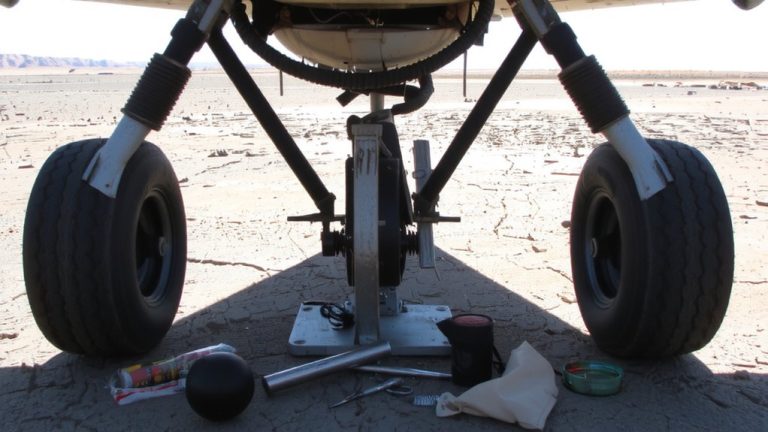
While you’re prepping your RC aircraft for its next flight, don’t skip the structural and mechanical check-small issues like a hairline crack in the fuselage or a loose wing bolt can lead to catastrophic failure mid-air. You need to inspect for damage along the fuselage and wing spars, watching for cracks, dents, or warping that could weaken the frame under stress. Check all screws, fasteners, and motor mounts; even a slightly loose bolt at the wing joint invites disaster. Landing gear must be straight and firmly attached to guarantee smooth takeoffs. Pay close attention to proper alignment: the wing should sit flush with the fuselage, and stabilizers must form precise 90-degree angles. Misalignment adds drag and reduces control. Always verify no loose parts threaten in-flight integrity-this isn’t just caution, it’s flight-critical prep.
Check Control Surfaces and Linkages for Proper Movement
Make sure your control surfaces-ailerons, elevator, and rudder-move freely and in sync, because even slight binding or stiffness can dull your response during critical maneuvers. For reliable RC flight, inspect each hinge and pushrod, ensuring they’re tight and undamaged. Confirm clevis pins are secured so linkages won’t pop loose mid-flight. Use the “High Five Method” to verify correct surface directions: transmitter over the plane, thumb shows expected surface movement. Set throws to factory specs-use low rates for maiden flights to avoid over-control. Precise surfaces mean predictable flight.
| Surface | Throw (inches) | Direction (Sticks Full) |
|---|---|---|
| Ailerons | 1/2″ up/down | Opposite movement |
| Elevator | 3/4″ up/down | Same movement |
| Rudder | 1″ left/right | Follows transmitter |
Confirm Battery Charge and Power System Readiness
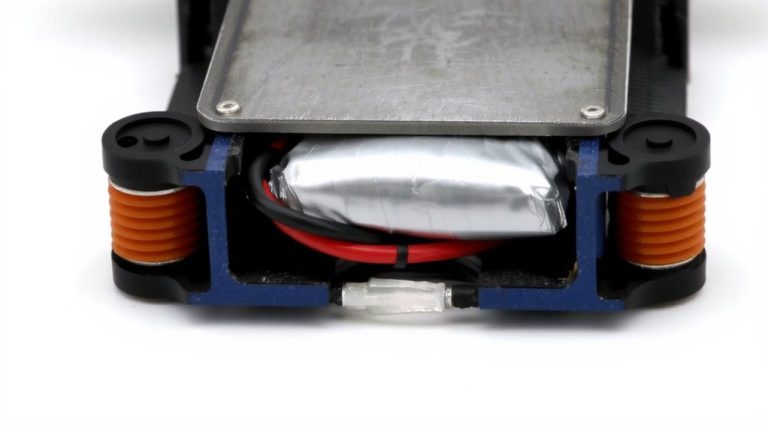
You’ve already checked that your control surfaces move smoothly and respond correctly, so now it’s time to focus on what keeps your RC aircraft alive in the air-its power system. Always confirm battery charge using a voltage checker; weak power is a top cause of crashes. For LiPo packs, each cell should read above 3.7V-use a charger with display to verify. Don’t forget, proper power system readiness includes secure connections between ESC, motor, and receiver to avoid arcing. Calibrate your ESC with the transmitter so throttle closes fully and opens smoothly. Set a voltage alarm to trigger at 3.5V per cell, giving you time to land safely. While balancing cg point is essential, none of it matters if your battery fails mid-flight. Double-checking these steps keeps your plane powered, stable, and reliable from takeoff to landing.
Test Your Radio, Servos, and Full Signal Range
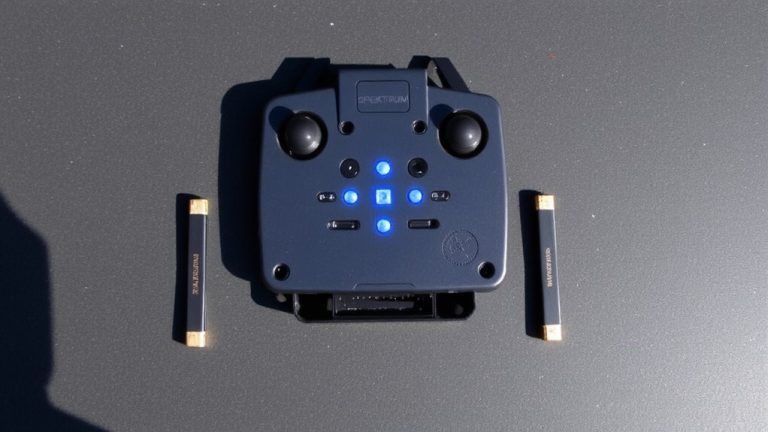
Once your power system’s locked in, it’s time to make sure you’ve got solid, uninterrupted control-because even the best-flying plane won’t stay airborne long if your signal drops. Always power on your transmitter first to lock in a clean signal and prevent servo glitches. Use the “High Five Method” to confirm your control surfaces move correctly: hold your transmitter over the aircraft’s center, thumbs up, and check each surface moves toward your thumb. Inspect receiver antennas-keep them straight and away from carbon fiber or metal to avoid interference. Perform a range check by walking at least 30 paces away, testing response, or follow your 2.4 GHz transmitter’s built-in range-check mode. If controls act erratically, re-bind the receiver-even with full battery, a weak bind kills the range of your transmitter.
Balance at the Recommended Center of Gravity
Though getting your radio linked and surfaces responding right is key, none of it matters if your plane’s balance is off, so nailing the center of gravity (CG) right from the start keeps your flight predictable and safe. As part of your Pre-Flight Checklist, always confirm the balance at the recommended center of gravity-usually 25–30% of the wing chord from the leading edge, at the thickest part of the wing on foamie trainers like the Bixler. Use two fingers or balance rods under the wings at that mark, keeping the fuselage level. A nose-heavy setup is safer than tail-heavy, so if it’s not perfect, lean slightly forward. For scratch-built models, testers report reliable performance every flight when balancing at the thickest wing section. Do this check every flight-consistency means control.
On a final note
You’ve checked the wings, secured the servos, and confirmed the CG-now your RC aircraft’s ready, but don’t skip the range test. With a 2.4 GHz transmitter, verify at least a 300-foot signal margin, no glitches. Fully charged 3S 11.1V LiPo? Check. Control surfaces move crisply, no slop in control horns. Real pilots note smoother response with digital servos like the Hitec D845. Launch with confidence: pre-flight done right means longer, safer flights, fewer fixes mid-air.