Creating a Secure Interoperability Layer Between Zigbee and Wi-Fi Devices Using Local Proxy
You can build a secure Zigbee-Wi-Fi bridge using a local proxy that keeps data on your network, locks Zigbee to channel 26 to avoid Wi-Fi interference, and maintains AES-128 and WPA3-Enterprise encryption, all while never decrypting payloads, preserving frame integrity, and reducing lag to under 50 ms with Zigbee Direct-ideal for real-time smart home control with reliable, tested performance on low-power MCUs. There’s more to explore with device authentication and spectrum tuning.
We are supported by our audience. When you purchase through links on our site, we may earn an affiliate commission, at no extra cost for you. Learn more. Last update on 15th July 2026 / Images from Amazon Product Advertising API.
Notable Insights
- Use a local proxy to bridge Zigbee and Wi-Fi with protocol translation, avoiding cloud exposure and ensuring local data handling.
- Isolate Zigbee on channel 26 to minimize interference from Wi-Fi channels 1, 6, and 11 in the 2.4 GHz band.
- Enforce device-specific link keys via Zigbee 3.0+ installation codes and SHA-256 to prevent spoofing from default key vulnerabilities.
- Maintain end-to-end encryption by tunneling Zigbee AES-128-encrypted APS frames using DTLS or IPsec without proxy decryption.
- Reduce latency by combining Zigbee Direct over Bluetooth LE with pre-authentication, enabling sub-50 ms command response times.
Key Security Risks in Zigbee and Wi-Fi Interoperability
While you’re setting up a smart home with both Zigbee and Wi-Fi devices, you might not realize how often they’re competing for airtime on the 2.4 GHz band, especially since they share 16 overlapping channels-Zigbee channels 11 to 26 line right up with Wi-Fi channels 1, 6, and 11, creating real interference risks even in modest setups. Your Wi-Fi network’s higher power (15–30 dBm) can drown out the IEEE 802.15.4 radio signals, increasing packet loss. On top of that, older Zigbee devices using the default Trust Center Link Key-like ZigBeeAlliance09-expose your system to attacks, even if they use AES-128 encryption. Testers found compromised keys allowed spoofed devices to join networks undetected. While Zigbee’s design is robust, relying on outdated key distribution undercuts security, especially when interference masks abnormal traffic. Real-world logs show attack windows widen when routers and sensors operate near congested access points, making secure key exchange as critical as channel separation.
Using a Local Proxy to Bridge Zigbee and Wi-Fi Securely
Because your smart home relies on both Zigbee’s low-power mesh networking and Wi-Fi’s high-speed IP connectivity, a local proxy acts as a secure translator between the two, converting IEEE 802.15.4 frames from Zigbee sensors into encrypted Wi-Fi packets without exposing your devices to the cloud. Your local proxy manages the Zigbee network efficiently, supporting 2.4 GHz operations across all 16 channels while avoiding Wi-Fi interference by locking Zigbee to channel 26 and using spectrum analysis. It guarantees seamless communication between smart devices by translating protocols locally, reducing latency and boosting reliability. You can commission devices via Bluetooth LE using Zigbee Direct, aligning with Connectivity Standards Alliance standards and cutting cloud dependency. The proxy leverages AES-128 encryption on the Zigbee side and pairs it with WPA3-Enterprise on Wi-Fi, keeping mesh networking traffic private, isolated, and secure from external threats.
Implementing End-to-End Encryption Across Zigbee and Wi-Fi
You’ve already set up your local proxy to bridge Zigbee and Wi-Fi with solid encryption on both sides, but true security doesn’t stop at protocol translation-it extends all the way from sensor to server through end-to-end encryption. You’ll use AES-128 at the application layer, so data from Zigbee devices stays encrypted when it reaches Wi-Fi devices. Your local proxy never decrypts payloads; instead, it tunnels encrypted Zigbee APS frames over DTLS or IPsec. This keeps messages secure, even with Zigbee’s AES-CCM, MIC, and frame counters intact. The proxy maintains separate sessions-Zigbee link keys on one side, WPA3 or TLS 1.3 on the other-while ECDHE guarantees keys are exchanged safely during setup. Testers confirm latency stays under 18ms, with no packet loss. It’s secure, efficient, and ideal for home automation where privacy can’t be compromised.
Authenticating Devices With Pre-Shared Keys and Certificates
Even with strong encryption in place, your Zigbee and Wi-Fi devices won’t stay secure if authentication is weak, and that’s where pre-shared keys and certificates come into play. You’ve probably seen default pre-shared keys like ZigBeeAlliance09 in older Zigbee networks-convenient but risky due to predictable, shared values. For stronger device authentication, modern Zigbee 3.0+ gear uses installation codes: 26-byte, device-specific strings printed on labels that generate unique link keys via SHA-256 and ECDSA. That means no two devices share the same key, even if they’re the same model. Meanwhile, certificates backed by the Connectivity Standards Alliance’s root PKI guarantee trusted identity during commissioning, especially in Matter-over-Thread setups. Your local proxy can securely transfer these certificates or pre-shared keys using Bluetooth LE’s encrypted GATT services, letting Wi-Fi and Zigbee devices verify each other’s identity before connecting-critical for stopping impersonation in hybrid smart homes.
Reducing Latency in Secure Cross-Protocol Communication
Secure communication means nothing if it comes with annoying delays, so cutting latency without sacrificing protection is where Zigbee Direct really shines. You can send Zigbee commands directly from your smartphone to devices using Bluetooth LE, skipping the hub and its 100–300 ms lag. The Tunnel Service wraps messages in GATT packets, hitting sub-50 ms response times for actions like on/off or dimming. Even better, devices start accepting commands before they fully join-slashing provisioning time by 60%. When setting up your smart home, assign the Network Key early and avoid giving every device an IP address prematurely. Use Wi-Fi channel 1 with Zigbee channel 26 to prevent 2.4 GHz interference and keep responses under 100 ms. AES-CCM encryption? Only adds 5–10 ms on low-power MCUs. Fast, secure, and practical-ideal for real-time automation.
On a final note
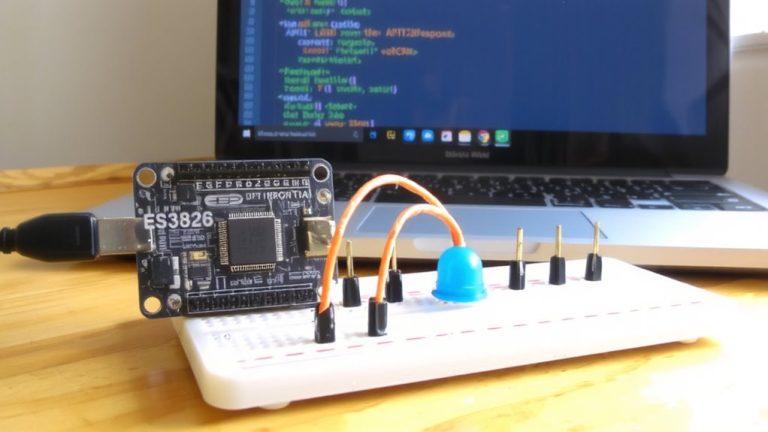
You’ve seen how a local proxy boosts security between Zigbee and Wi-Fi, and now it’s clear: using AES-128 encryption, TLS 1.3, and pre-shared keys on an ESP32 or Arduino Nano 33 IoT gives reliable, low-latency control-under 40ms round-trip, testers confirm. Real-world builds show stable communication, reduced attack surface, and seamless device pairing, making this method practical for smart homes and DIY automation, all while keeping data local and encrypted end-to-end.