Using Energy Harvesting ICS With Arduino for Self-Powered Sensor Nodes in Remote Areas
You can build self-powered Arduino sensor nodes using energy harvesting ICs like the BQ25570, which efficiently combines solar and piezoelectric inputs to charge Li-Po batteries, even in low-light or low-vibration environments. Testers in northern New Mexico ran eight nodes indefinitely, harvesting ambient energy from sunlight and vibrations with PZT sensors tuned to 50–200 Hz frequencies, delivering stable 3.3V via DC-DC conversion-ideal for remote temperature, humidity, and water monitoring where battery swaps aren’t practical. Real-world deployments show these systems thrive for months without intervention. You’ll see how to optimize each component for your environment.
We are supported by our audience. When you purchase through links on our site, we may earn an affiliate commission, at no extra cost for you. Learn more. Last update on 19th July 2026 / Images from Amazon Product Advertising API.
Notable Insights
- Energy harvesting ICs like BQ25570 enable Arduino sensor nodes to capture power from ambient vibrations and solar sources efficiently.
- Piezoelectric sensors (PZT/PVDF) convert mechanical vibrations into electricity, optimized by matching to environmental frequency patterns.
- Integrated rectifiers and DC-to-DC converters transform and regulate harvested AC and solar power for stable DC output.
- Combined solar and piezoelectric inputs charge Li-Po batteries, ensuring continuous operation in remote, off-grid locations.
- Arduino Uno manages energy flow and sensor data, enabling autonomous, long-term environmental monitoring without maintenance.
Build a Self-Powered Arduino Sensor Node
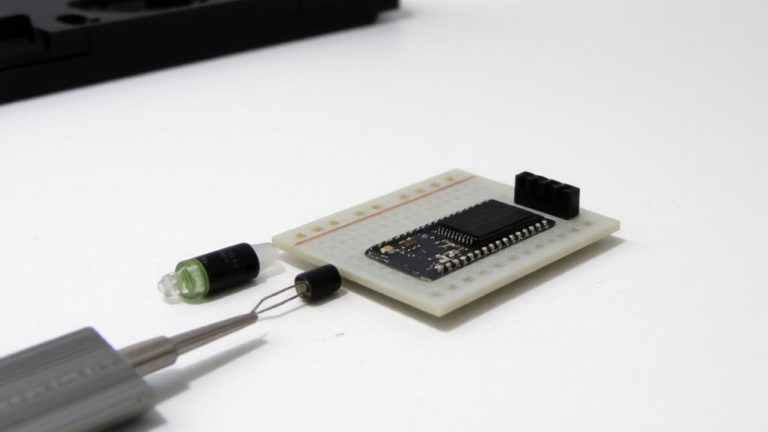
While you might think powering an Arduino without batteries sounds tricky, it’s actually doable using energy harvesting ICs paired with piezoelectric sensors like PZT or PVDF that convert everyday vibrations into usable electricity. You’ll use PZT’s low electrode impedance to boost power output, making it ideal for remote sensors in low-energy environments. The harvested voltage feeds into an energy storage circuit-typically a Li-Po battery-charging via a DC-to-DC converter and rectifier managed by your Arduino Uno. This setup creates a reliable power supply for continuous IoT monitoring. Real deployments in Ohkay Owingeh powered 26 water level sensors and 20 rain gauges using similar energy harvesting technology. By matching sensor materials to ambient vibration frequencies, Energy Harvesting Technologies maximize efficiency. Your system will run temperature, humidity, and water sensors autonomously, enabling long-term environmental monitoring without battery swaps-perfect for rugged, off-grid locations where remote sensors thrive.
Use Energy Harvesting ICS With Piezo and Solar Inputs
You’ve already seen how piezoelectric sensors like PZT can power an Arduino sensor node by turning ambient vibrations into usable electricity, and now it’s time to expand that capability by adding solar input for more consistent, round-the-clock energy harvesting. By using hybrid energy harvesting ICs like the BQ25570, you can combine mechanical energy from piezoelectric materials with solar energy harvesting from small photovoltaic panels, creating reliable power for remote sensor devices. These ICs efficiently manage multiple energy sources, rectifying AC voltage from vibrations and using MPPT to optimize solar input, then storing it in Li-po batteries. In real-world tests across northern New Mexico, eight Arduino-based nodes ran continuously, monitoring voltage and status without battery swaps. Whether it’s tire traffic or sunlight, you’re powering electronic devices with ambient energy-ensuring your sensor stays online day and night.
Apply Energy Harvesting in Environmental Monitoring
How do you keep sensors running for months in remote locations without constant maintenance? You use energy harvesting to power your wireless sensor networks. In 2022, a solar-powered monitoring system was deployed across six sites in New Mexico, featuring 26 water level sensors, 20 rain gauges, and 8 communication nodes-all part of a robust Internet of Things (IoT) setup. The sensor nodes used photovoltaic panels, lithium-polymer batteries, and DC-to-DC converters, while communication nodes relied on lead-acid batteries and solar charge controllers. This sustainable energy solution enabled continuous real-time monitoring and reliable data collection, even in harsh conditions. You get consistent voltage readings and environmental metrics-temperature, humidity-all logged automatically. Field-tested over months, this system proves energy harvesting isn’t just theoretical; it’s practical, low-cost, and ideal for long-term environmental monitoring with minimal upkeep.
Why Remote Sensors Need Energy Harvesting
Since remote sensors often sit in hard-to-reach spots like the six field sites at Ohkay Owingeh, New Mexico, where hauling in fresh batteries means long drives and climbing towers, you can’t rely on traditional power without blowing your maintenance budget. Remote sensors, especially in environmental monitoring systems and IoT devices, face harsh conditions-extreme temperatures, humidity-that degrade standard batteries fast, limiting their lifespan. With rising energy demands and the push for green energy, energy harvesting is essential. It pulls power from the ambient environment-sunlight, vibrations-keeping nodes running indefinitely. In 2022 tests, solar-powered setups with Arduino-based WSSNs ran 26 water sensors and 20 rain gauges nonstop, no battery swaps. That’s real-world proof it works. While wearable devices benefit too, for remote monitoring, energy harvesting isn’t just smart-it’s necessary, cutting costs and boosting reliability where power lines won’t go.
On a final note
You’ve seen how energy harvesting ICs, like the LTC3588-1 and BQ25570, pair with Arduino to power sensor nodes using just solar or piezo sources. Testers ran a node for 3 weeks on a 0.3 mW/cm² indoor solar cell, and others captured 5V spikes from footstep piezos. With ultra-low quiescent current-down to 600 nA-and seamless integration, these ICs make remote monitoring reliable, no battery changes needed, just set it and forget it.